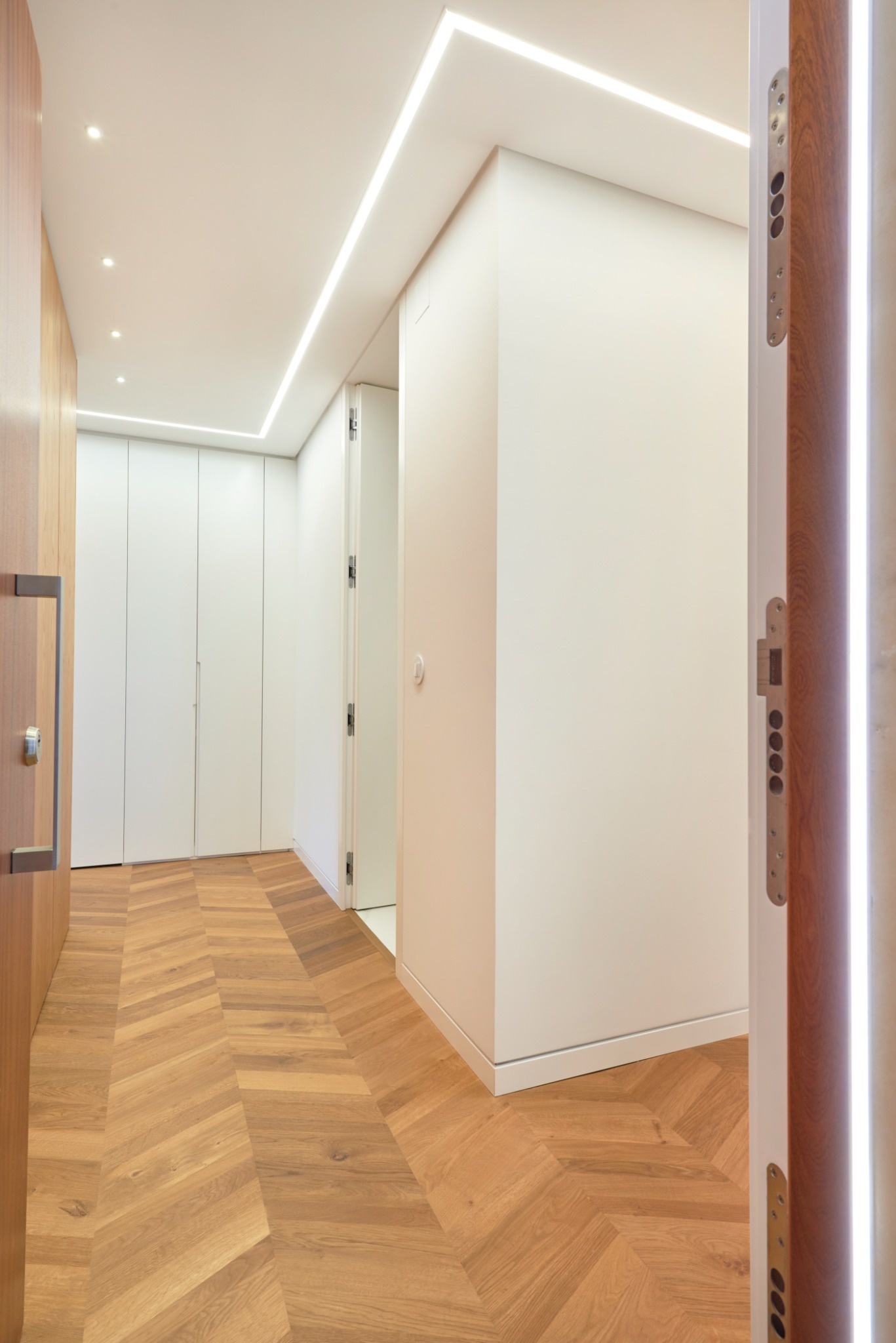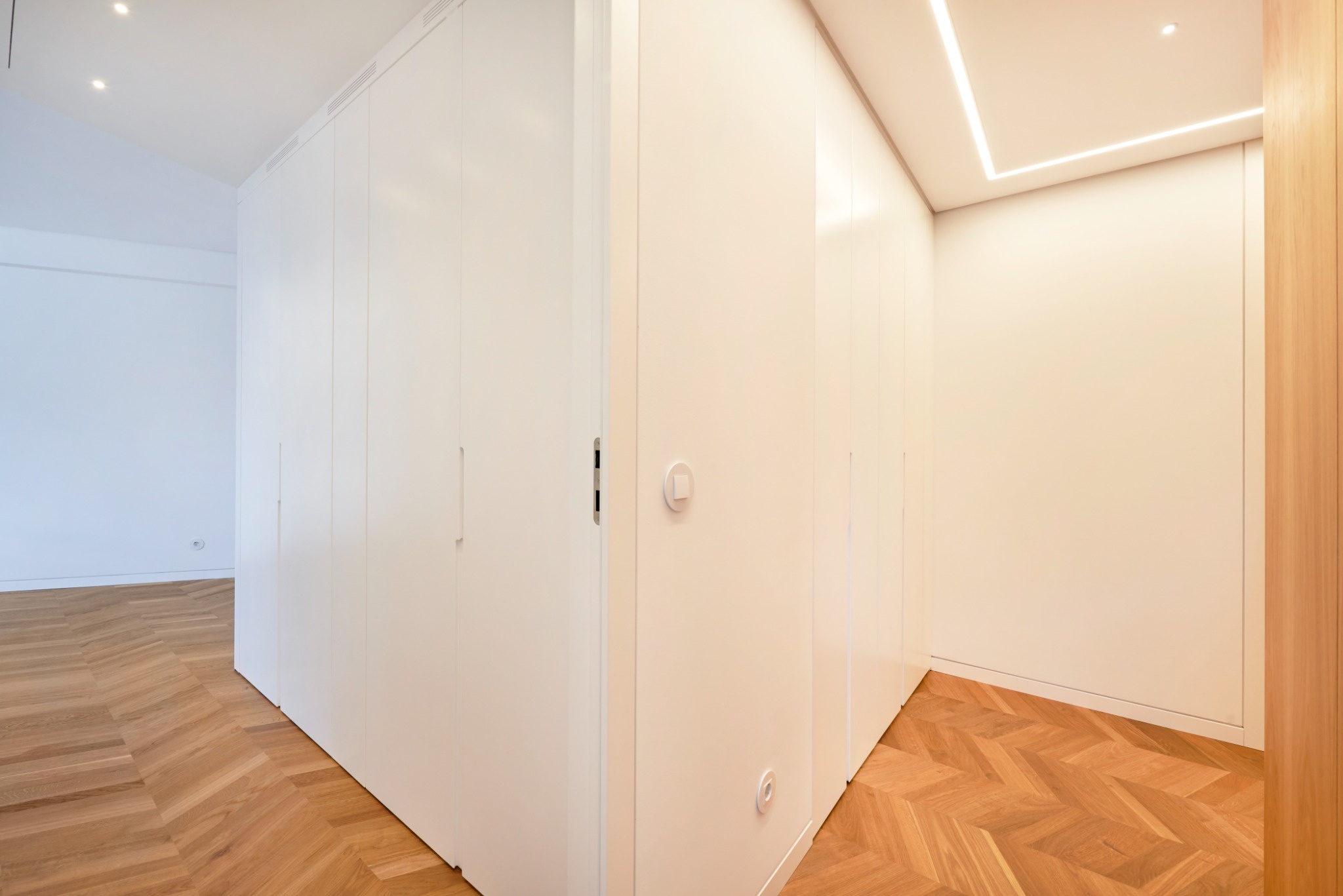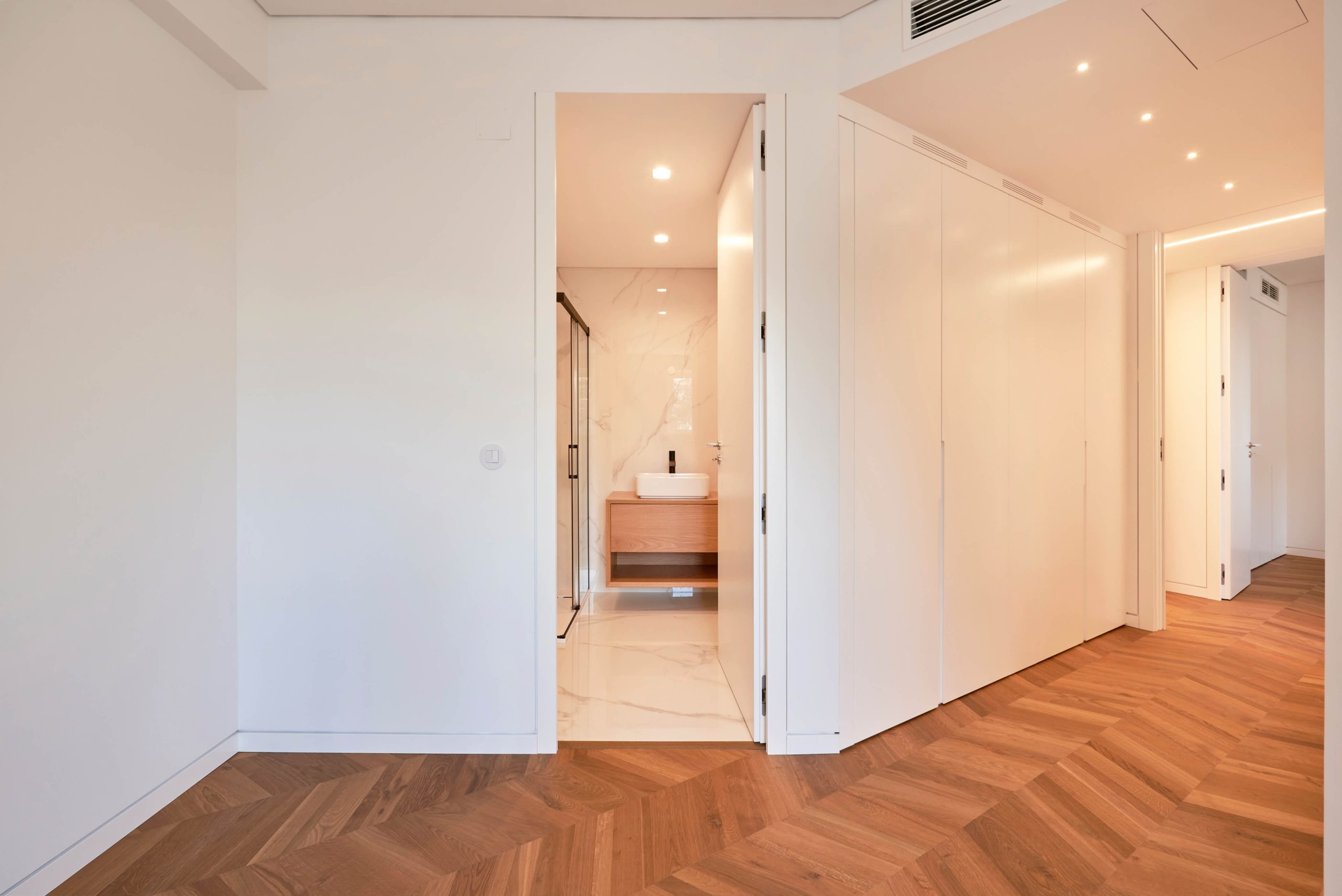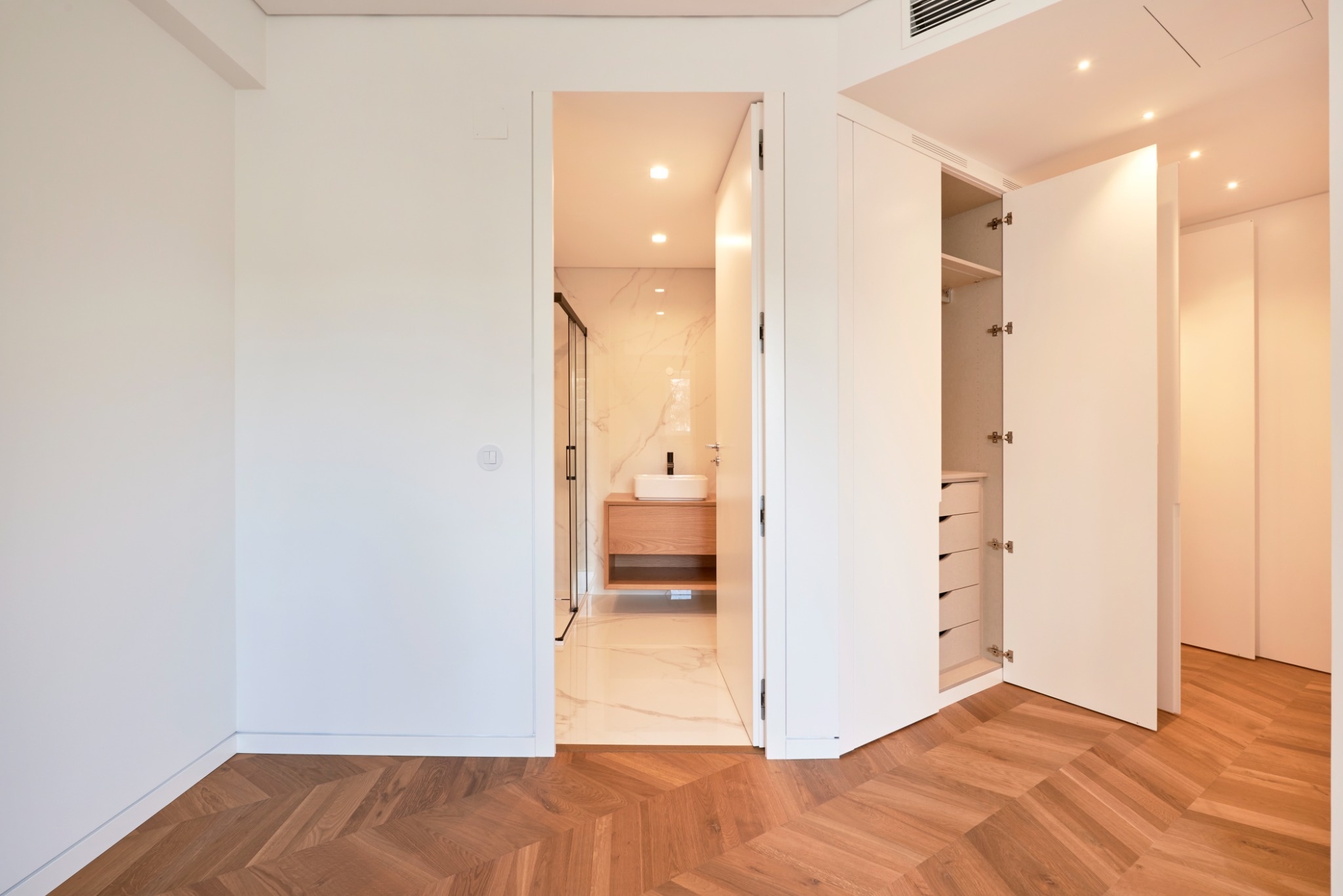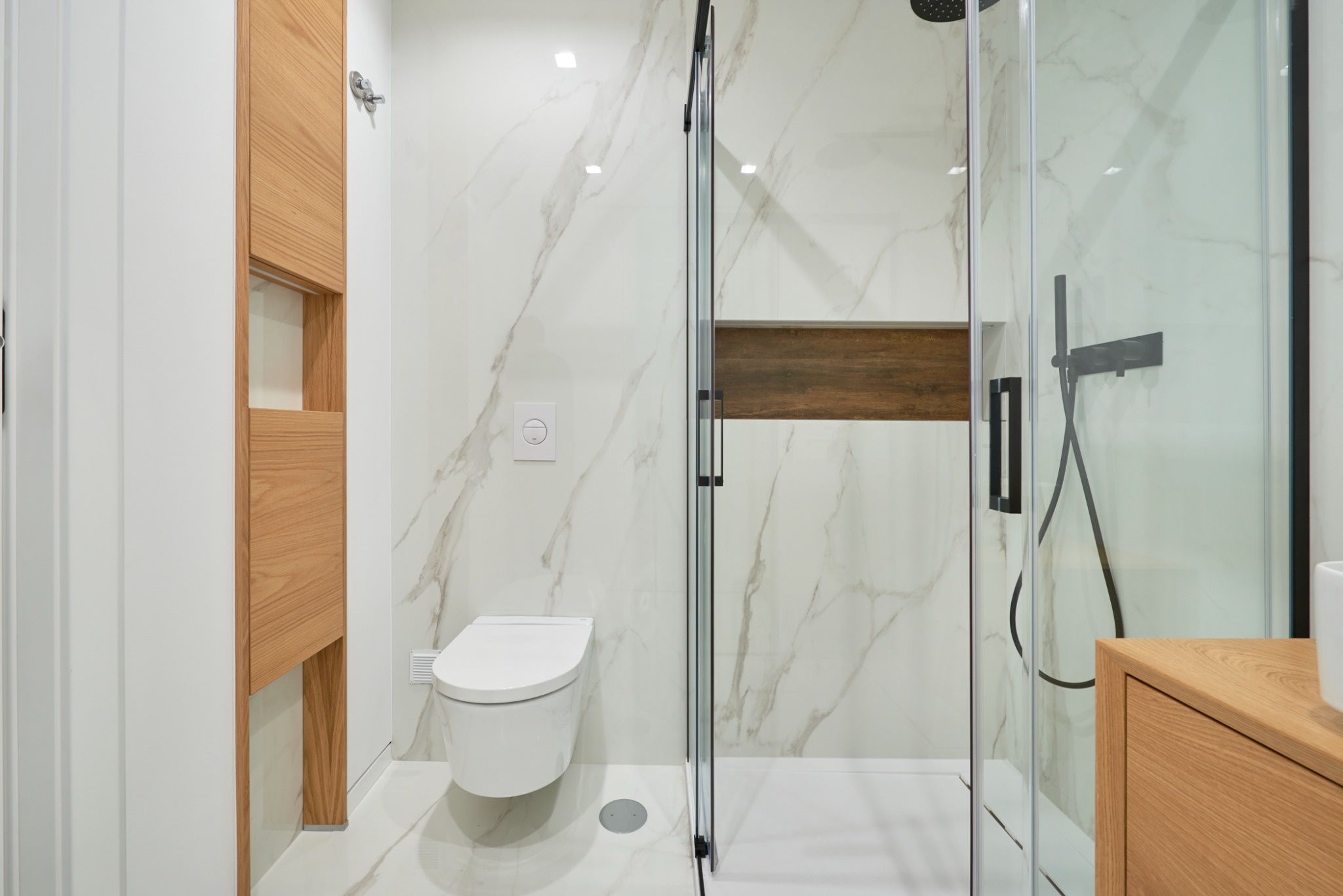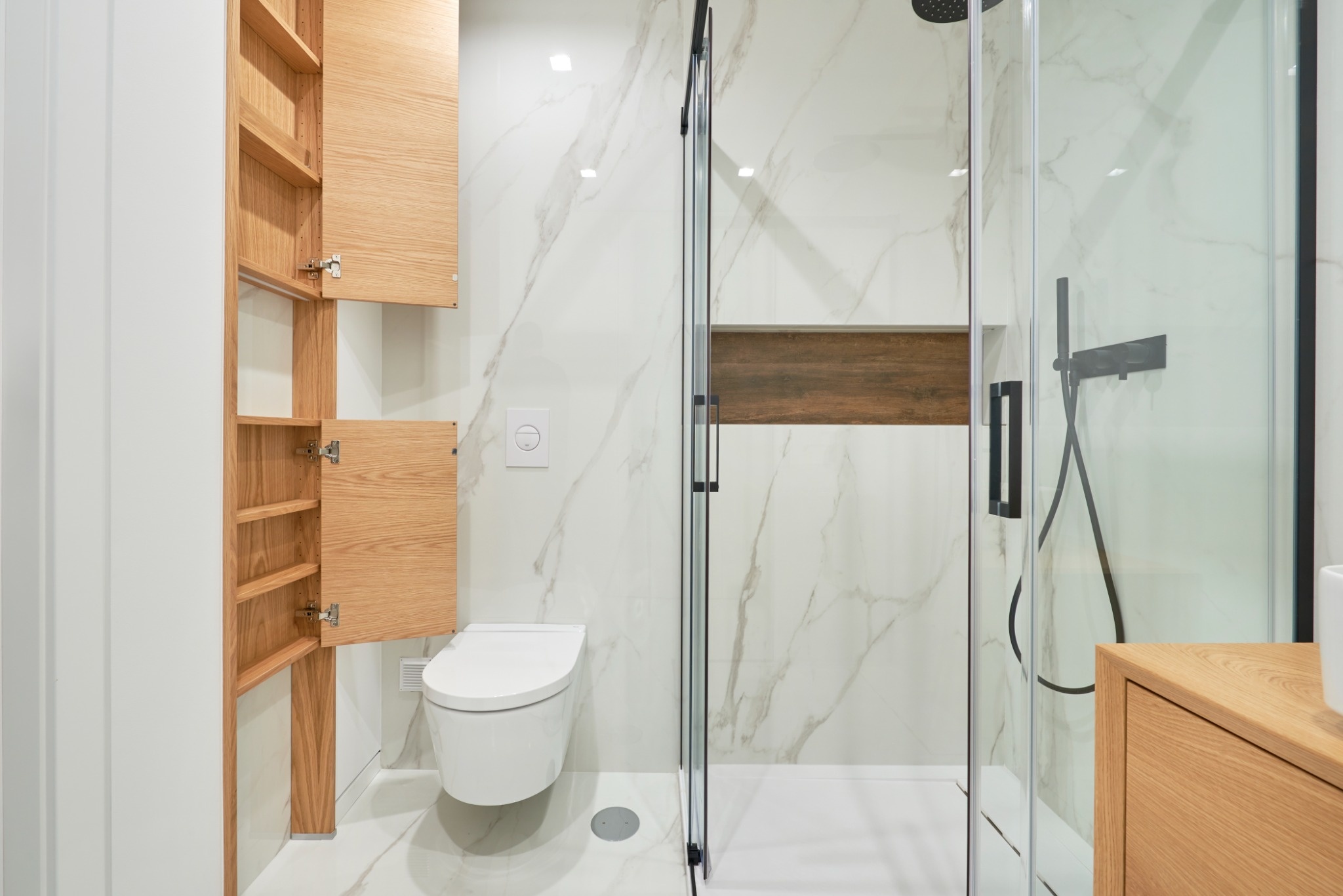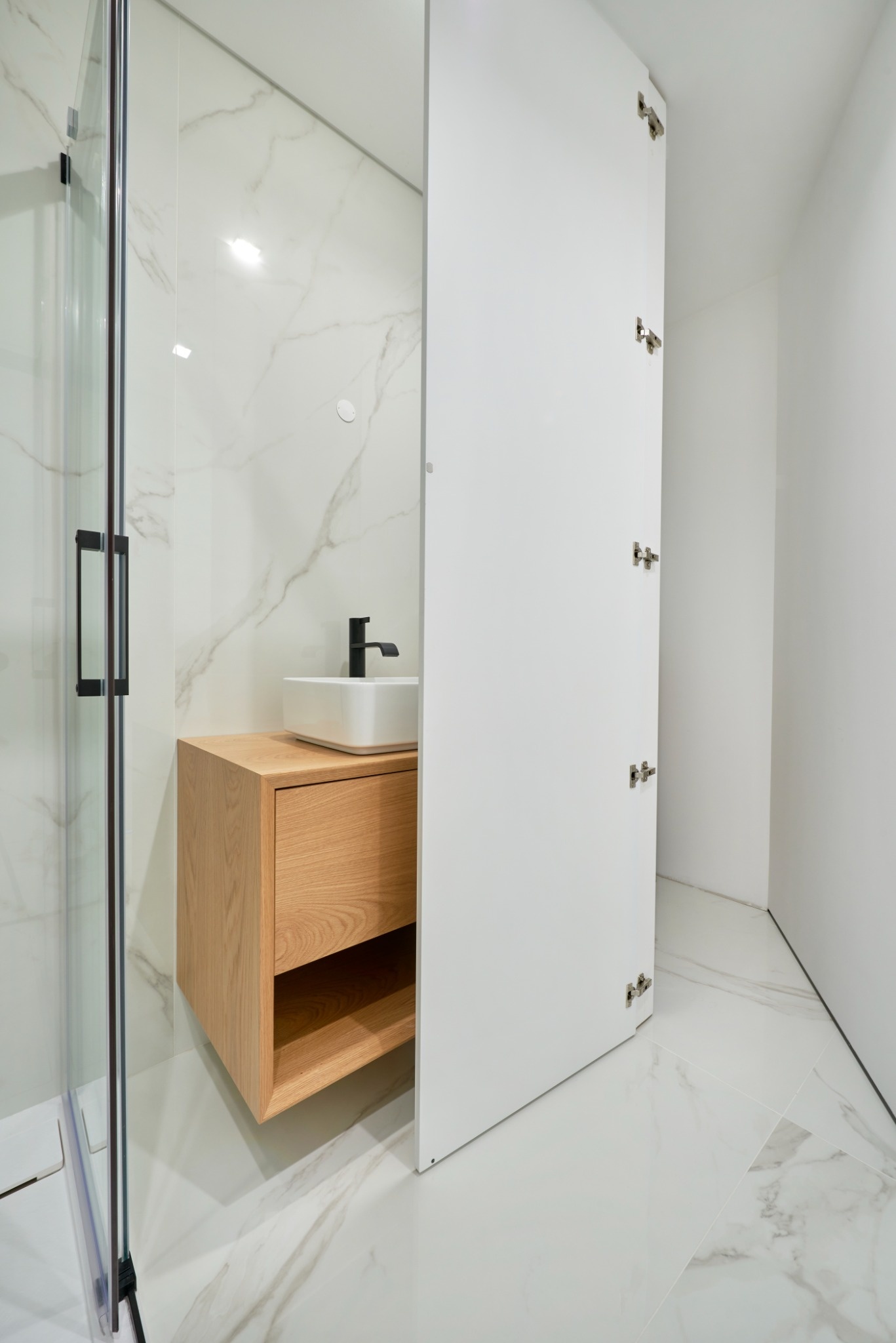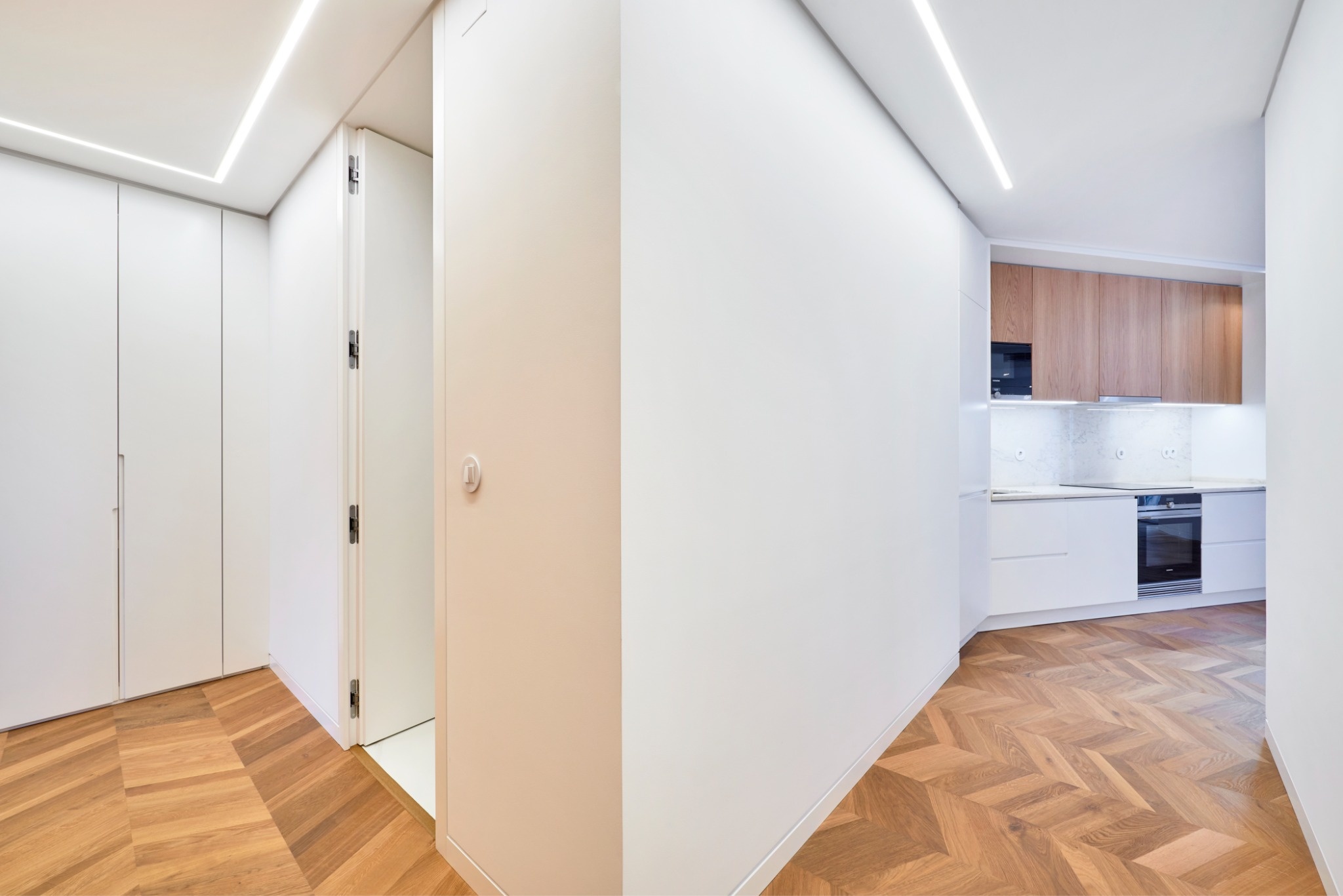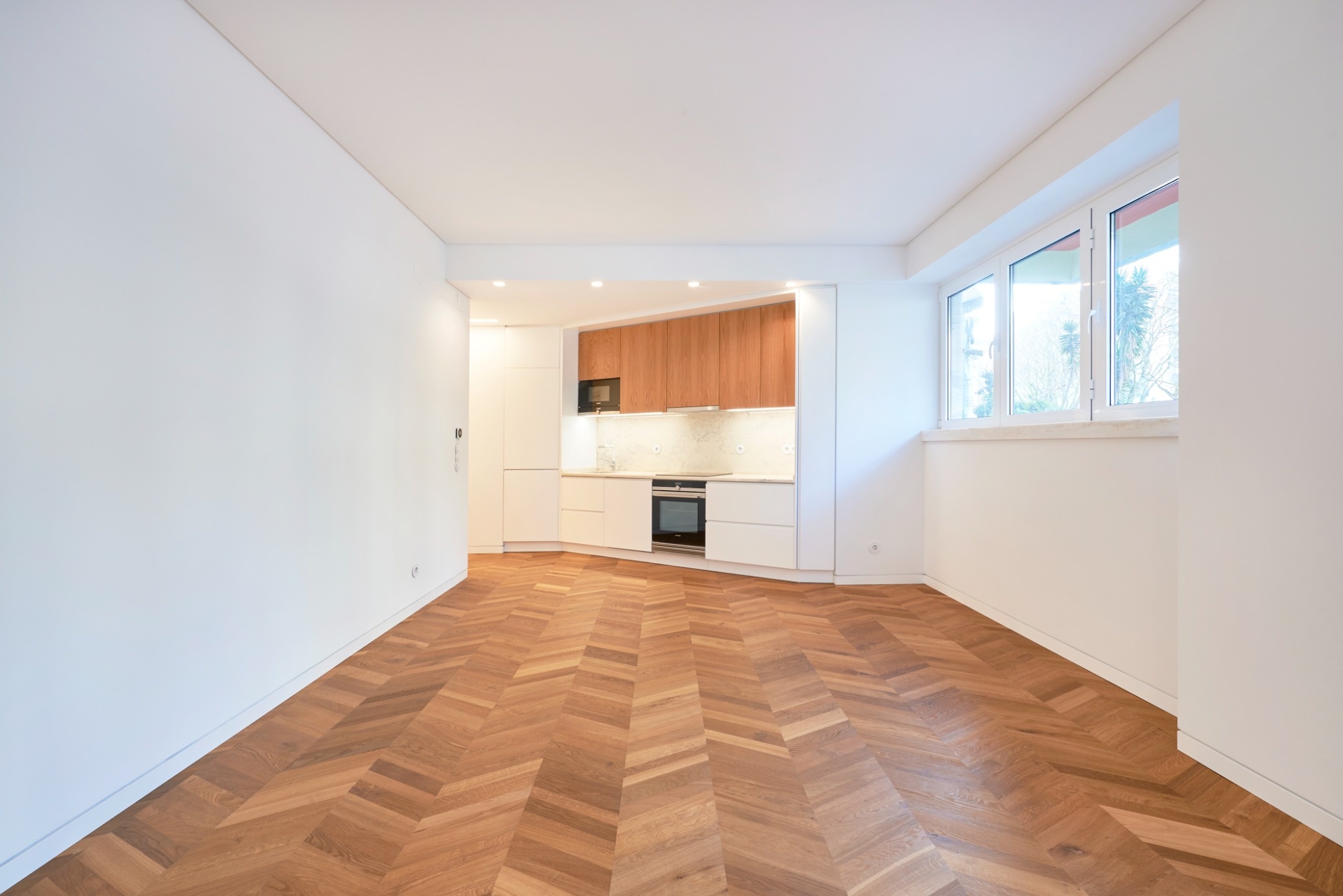

The project is the result of a municipal permit for a change of use—specifically, the conversion of a commercial space (office) into residential use—which allowed for the creation of two three-bedroom apartments within a total gross area of 220 square meters.
As a starting point for projects of this kind, it is essential to consult the Municipal Archives and the Lisbon City Council to research the background and legal framework for a change-of-use project.
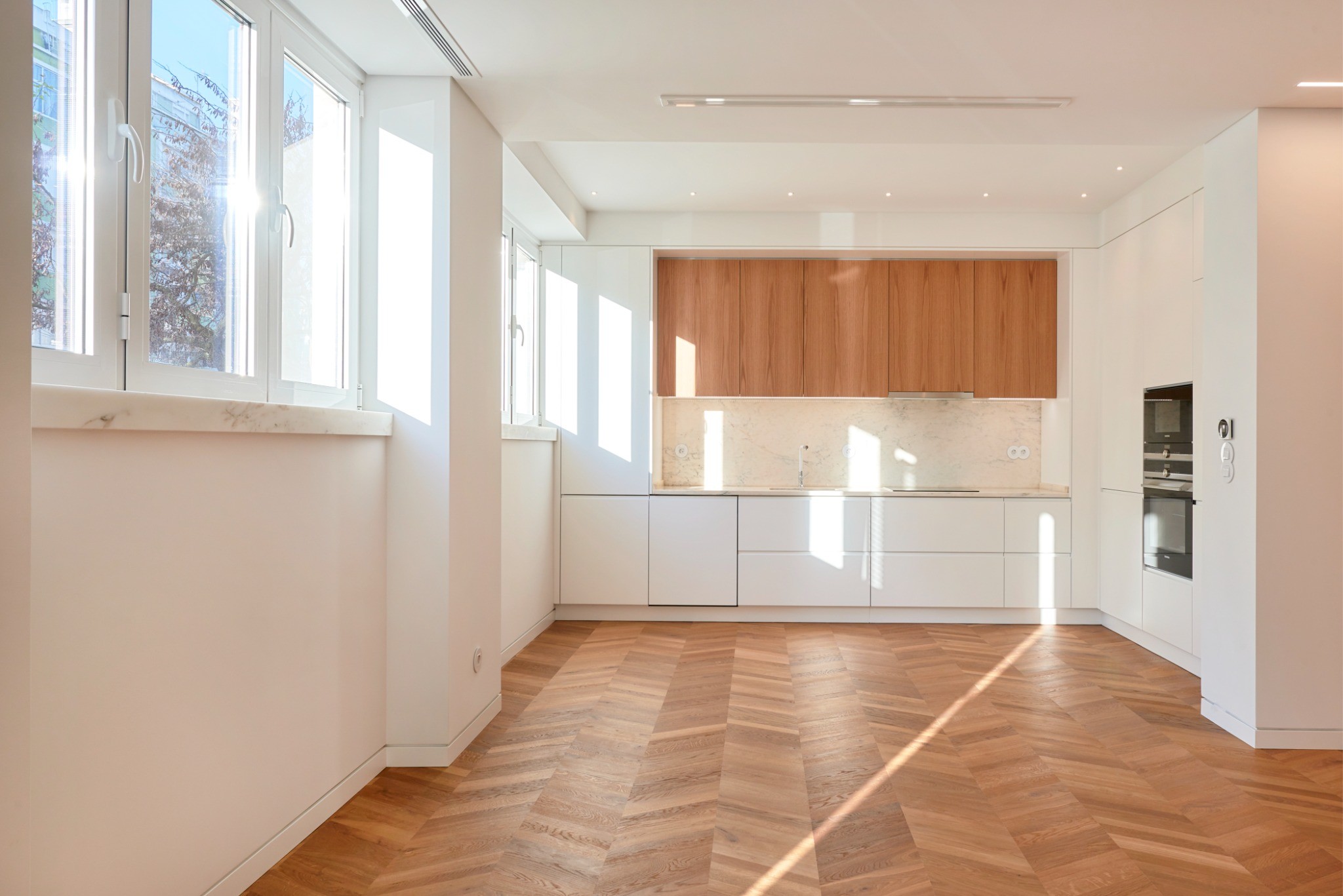
The renovation of an open-plan office space into two three-bedroom apartments, spread across 220 square meters, required a lengthy creative and technical process. The fact that there were already two separate entrances (left and right) facilitated the planning of the functional layout and access to the apartments. The goal of creating two highly functional apartments with a contemporary design featuring simple, timeless lines and plenty of natural light was successfully achieved.
The client’s brief was explicit regarding the high standard of quality required for the finishing materials in this renovation. All spaces and finishes were carefully selected and designed in detail to ensure that the renovation work was carried out with precision.
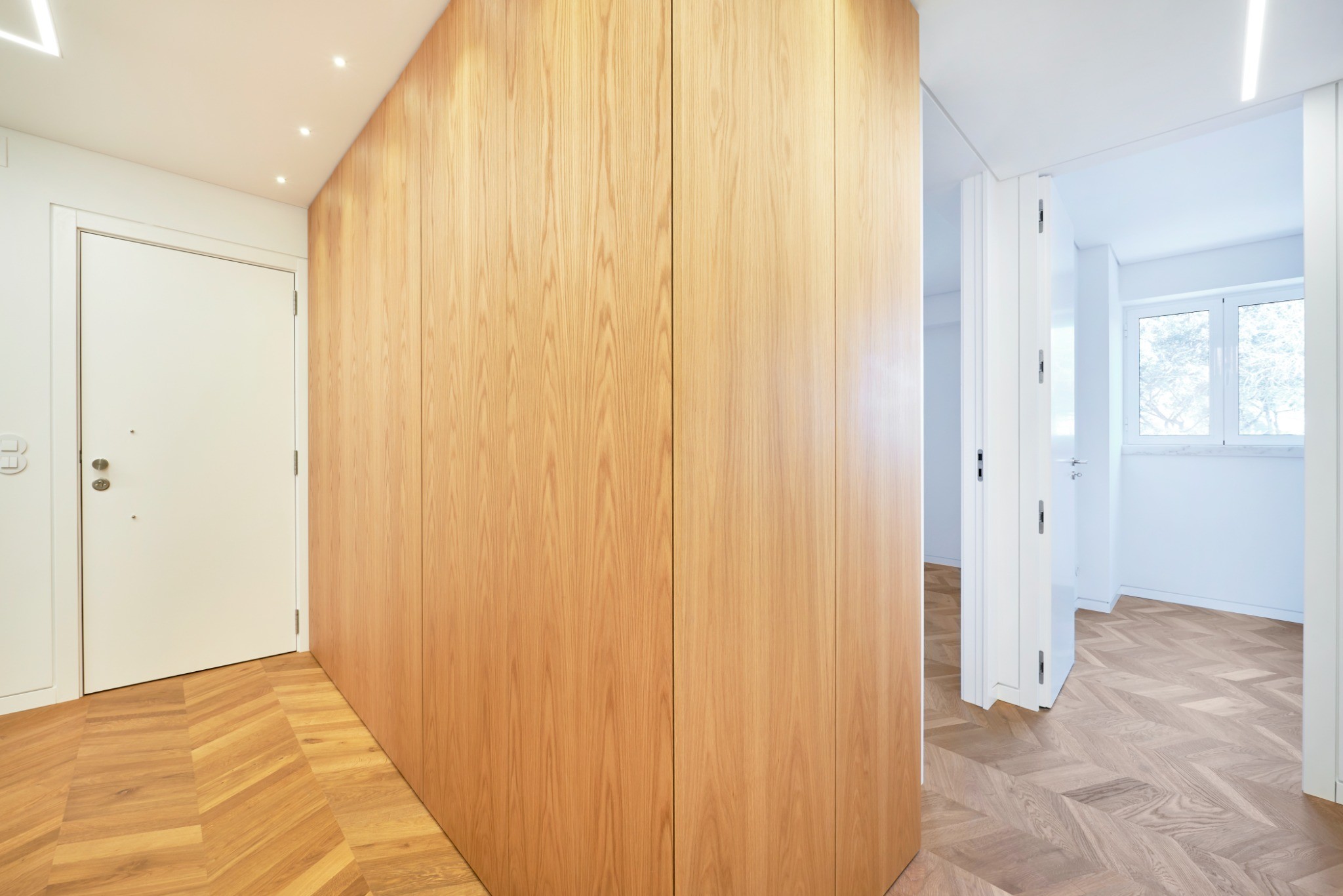
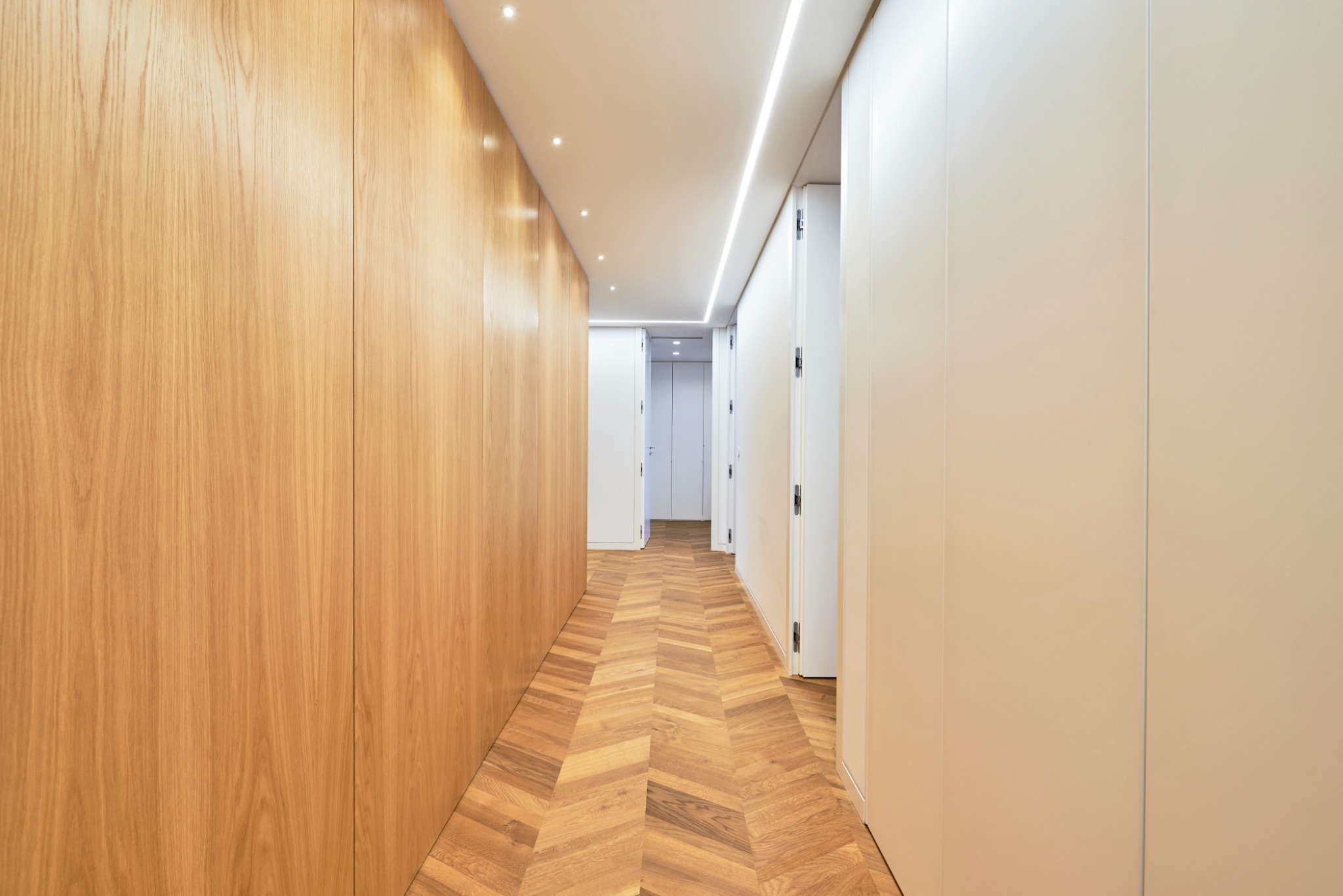
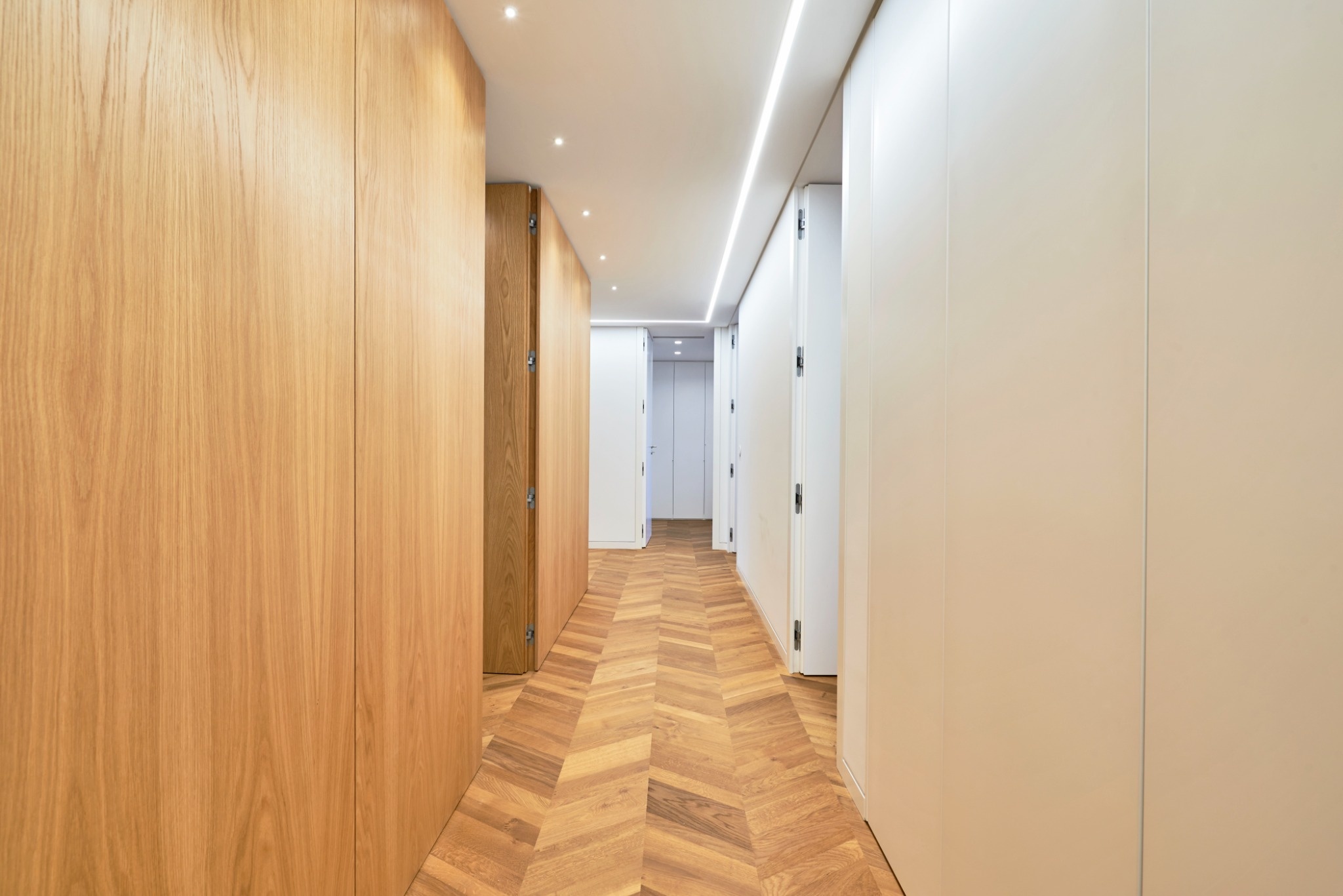
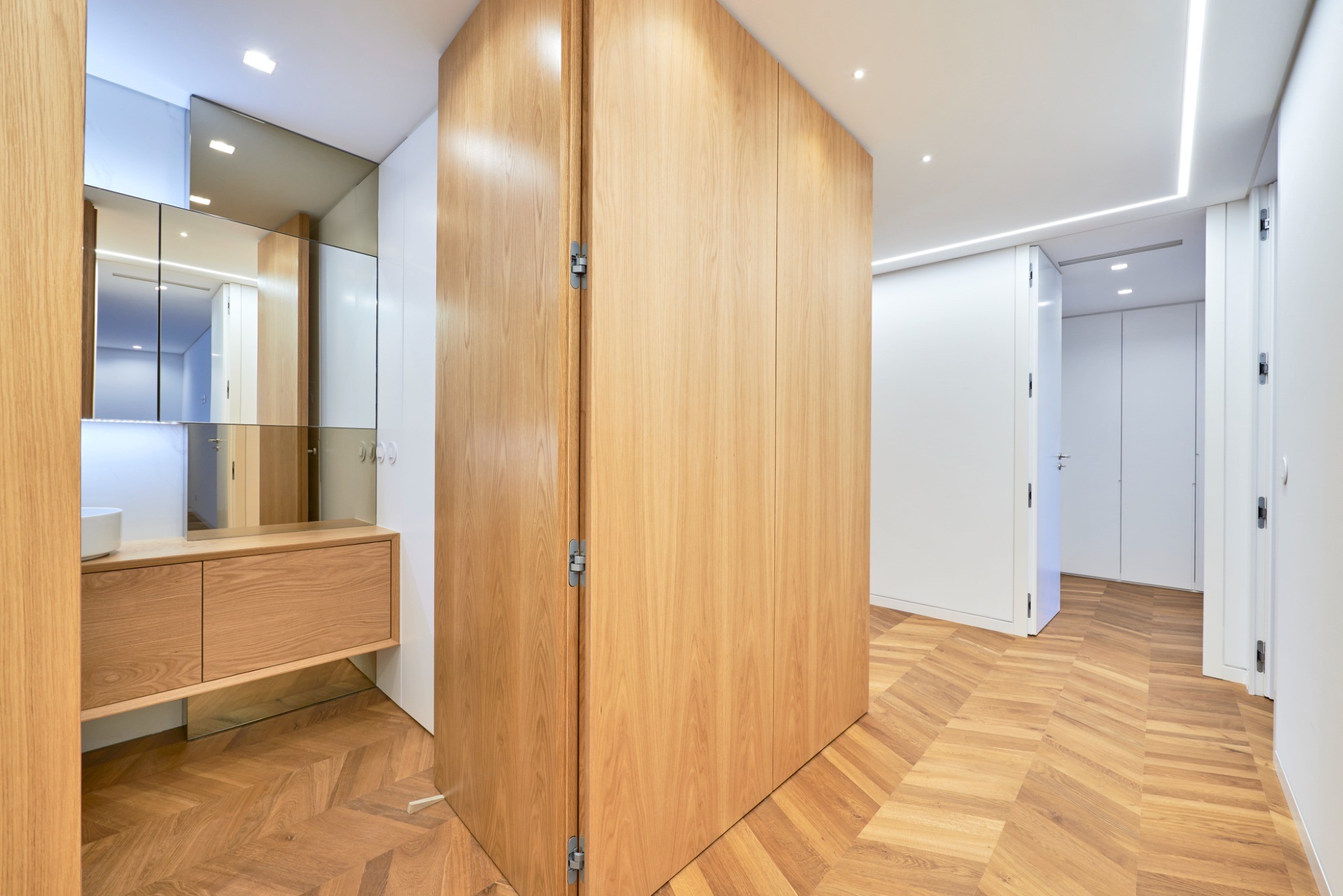
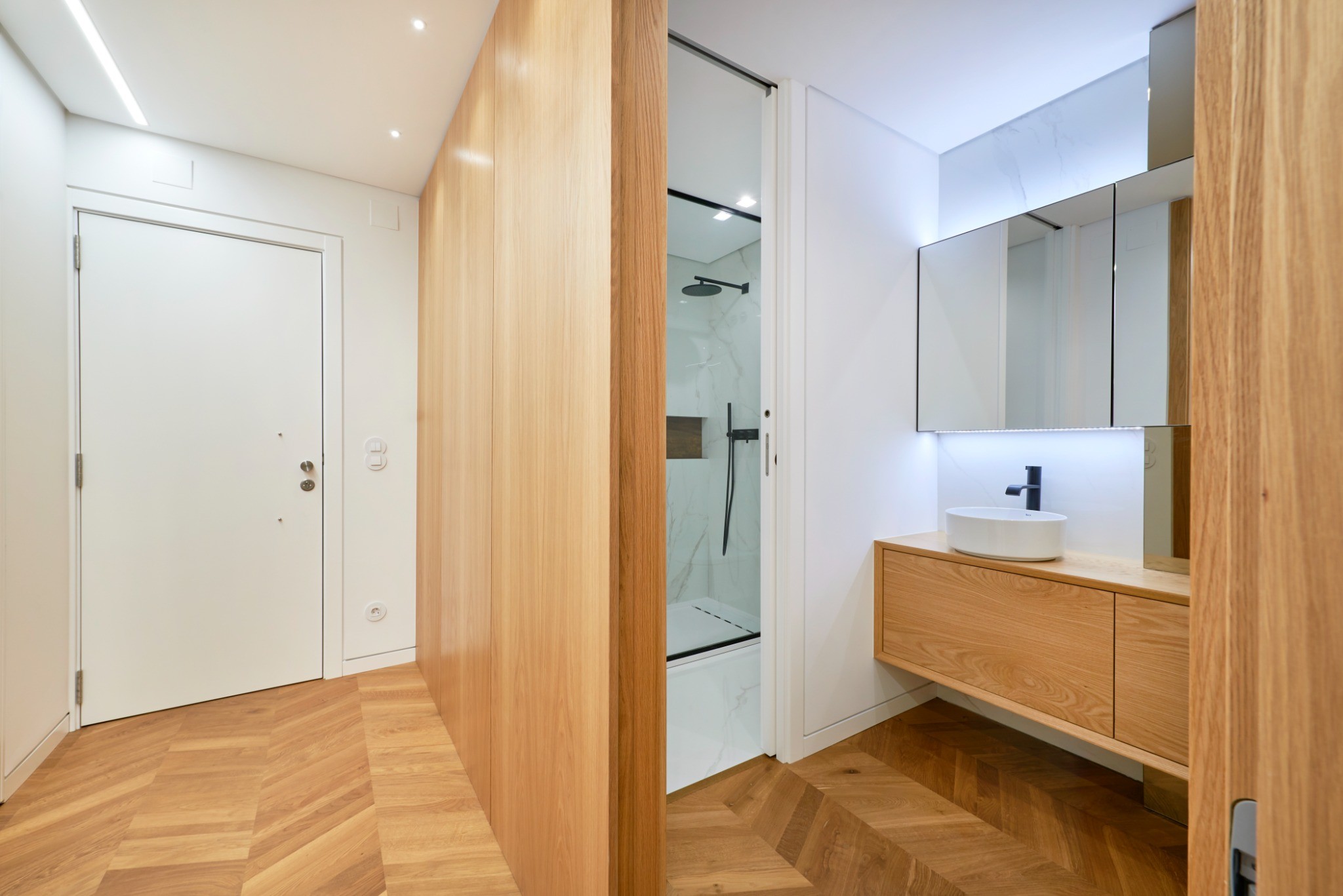
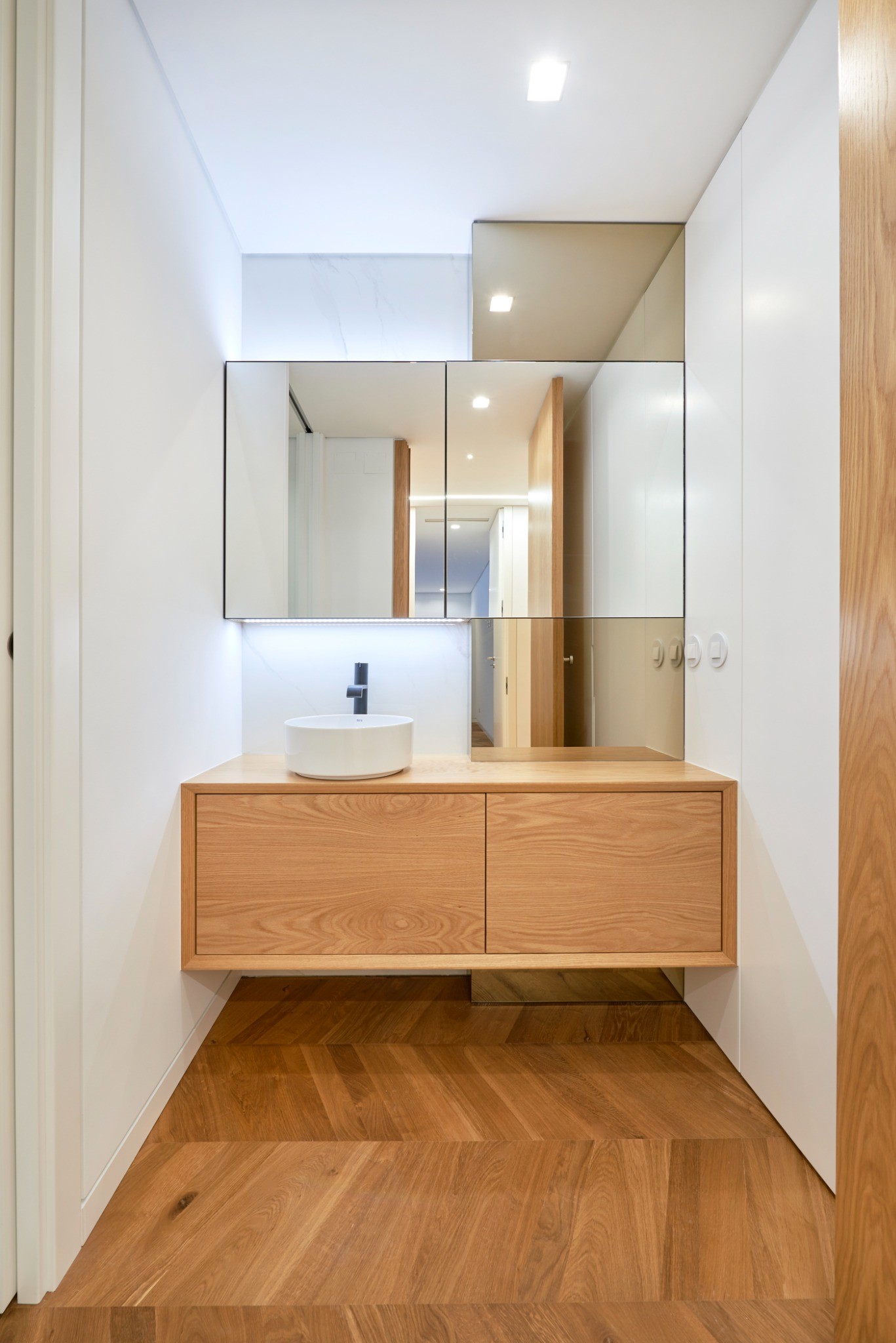
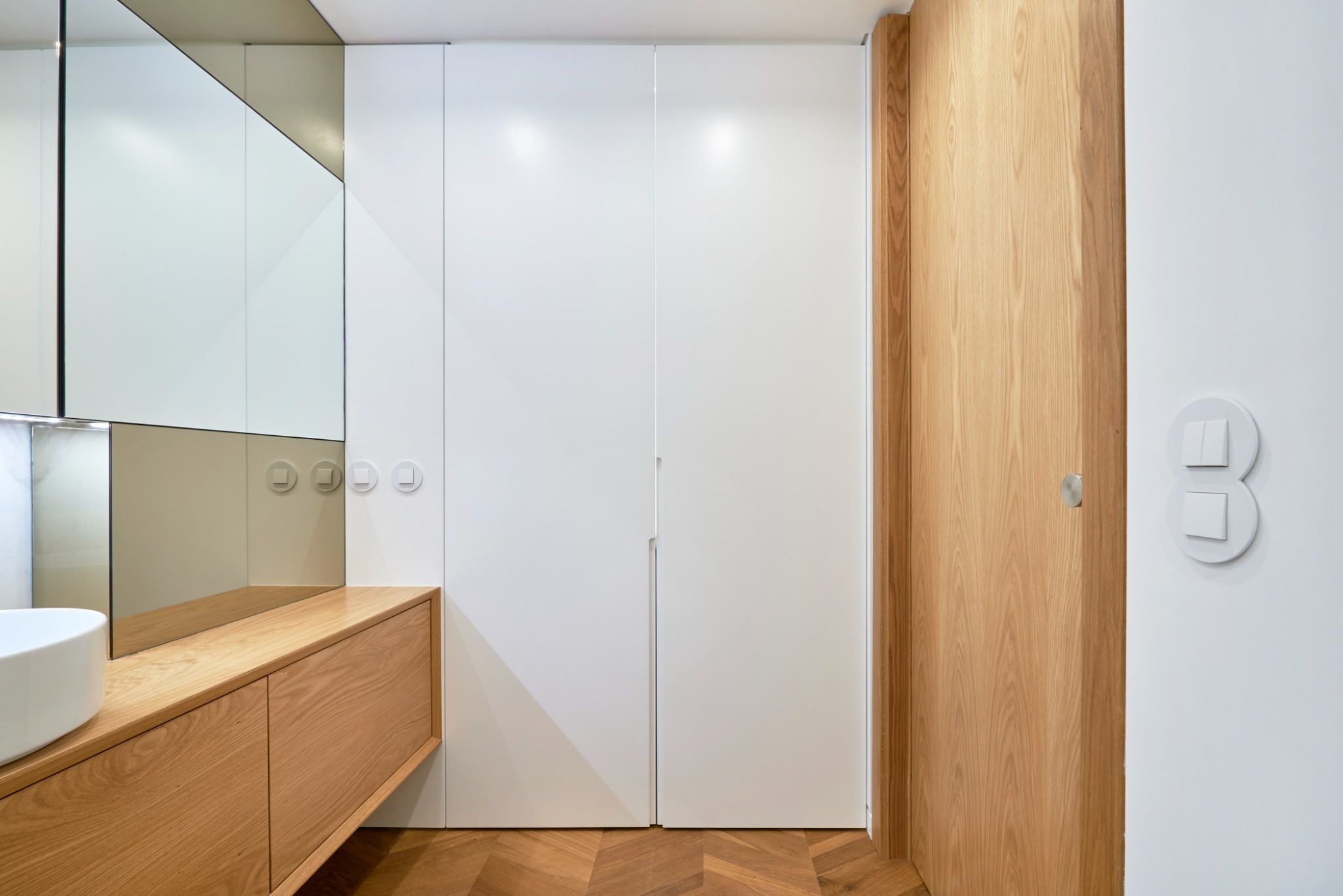
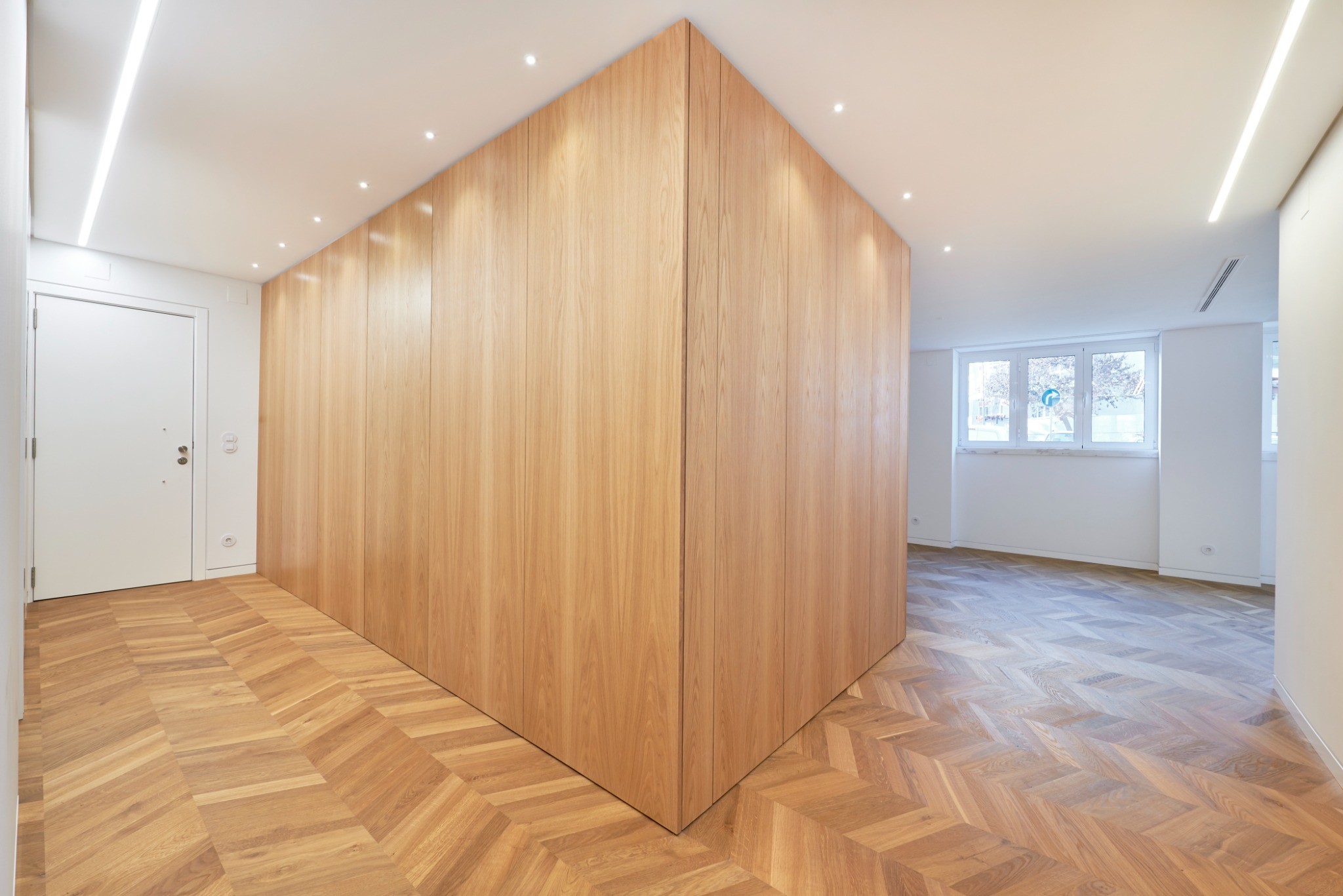
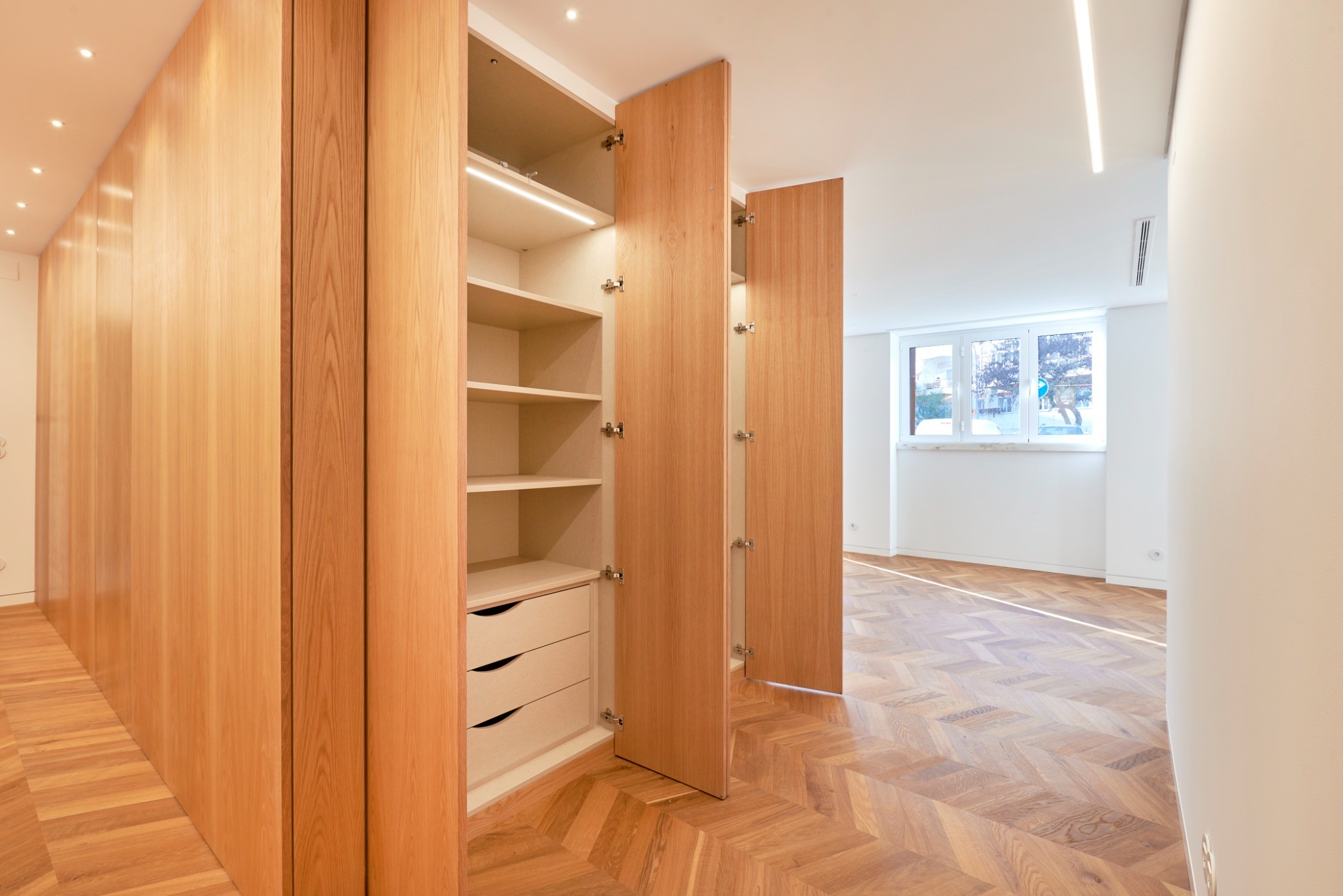
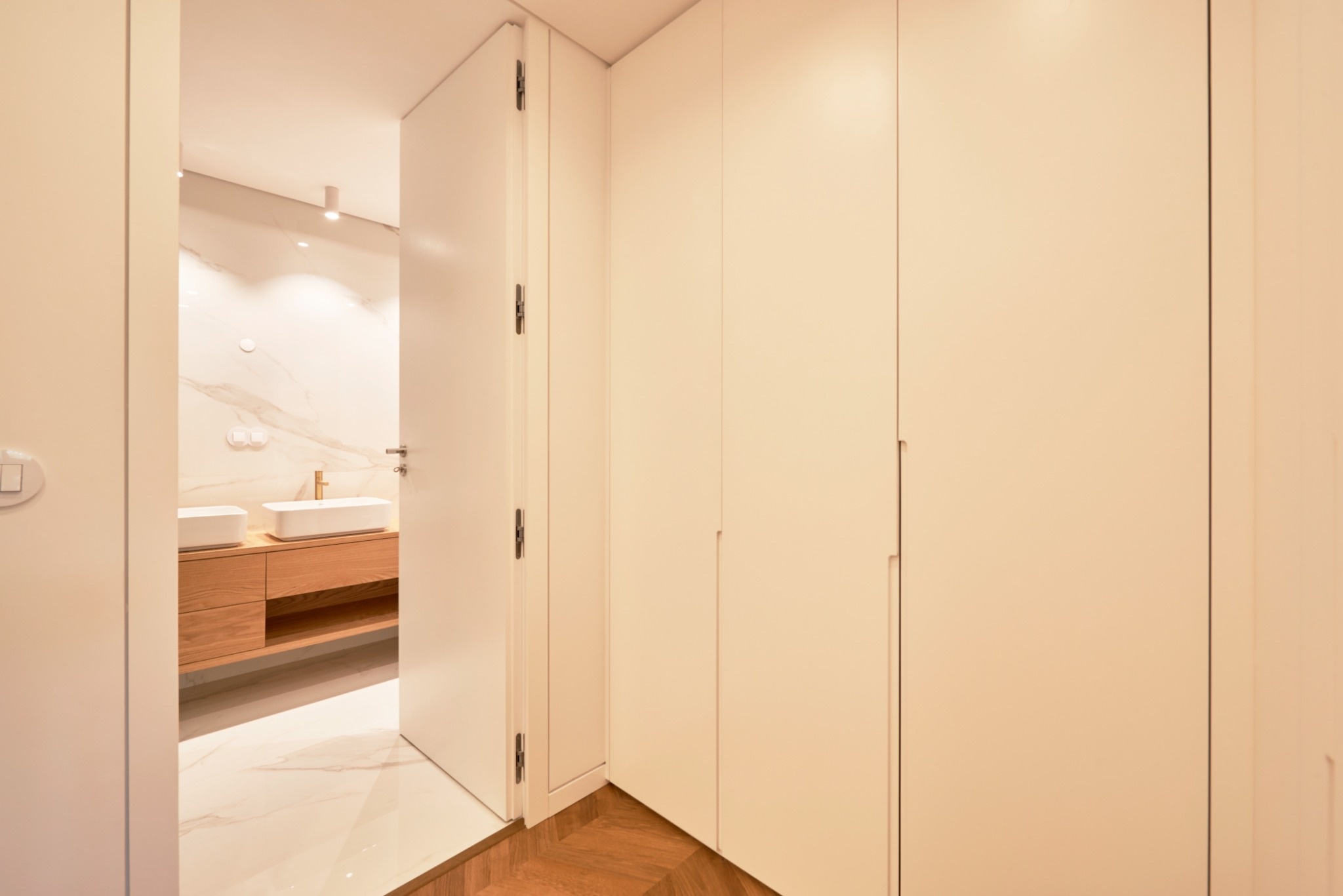
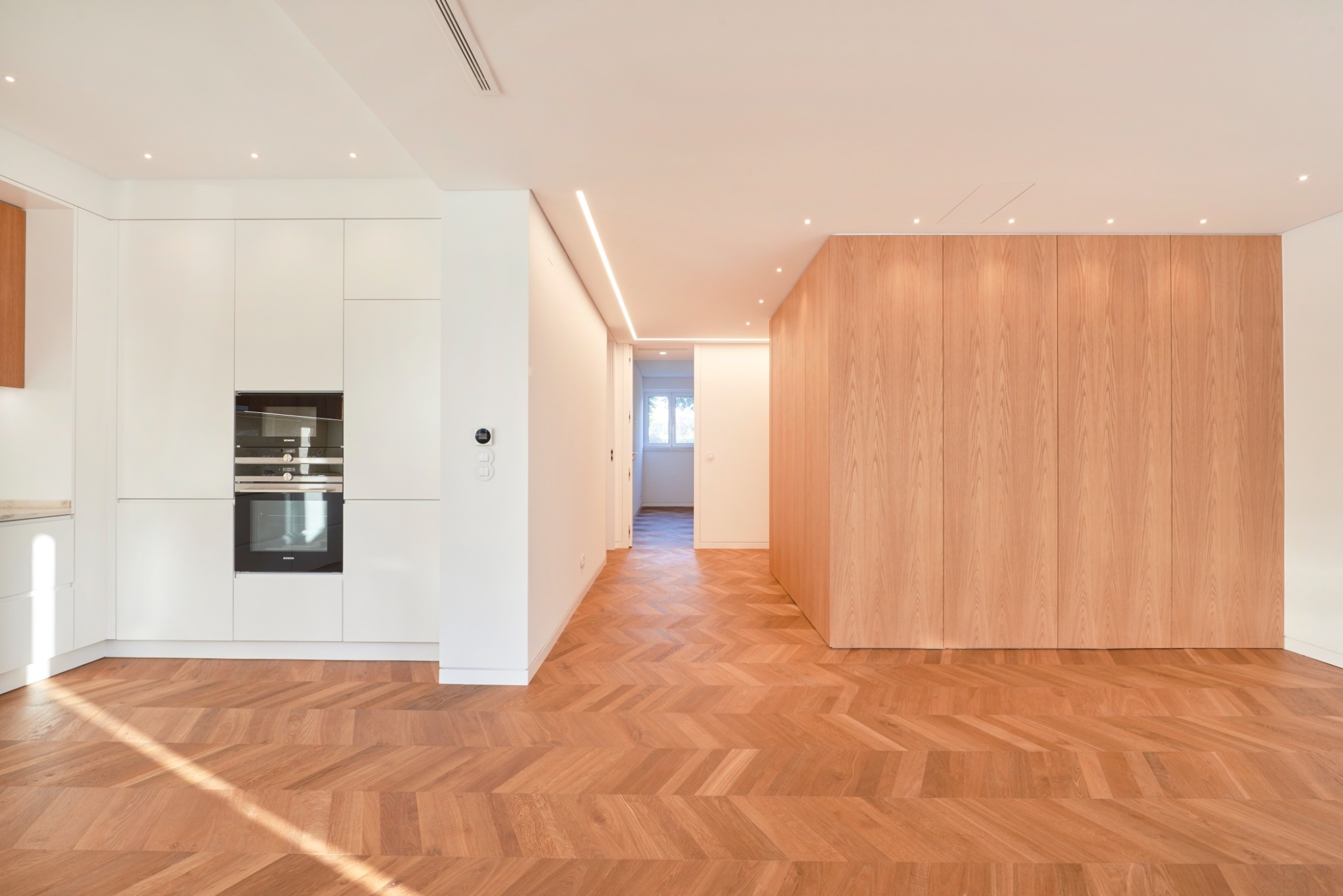
In terms of layout, a central core clad in oak paneling was created, housing a guest bathroom, laundry room, and storage area, all accessible through doors concealed within the panels. This core serves as the dividing line between the common area and the private areas of the apartments.
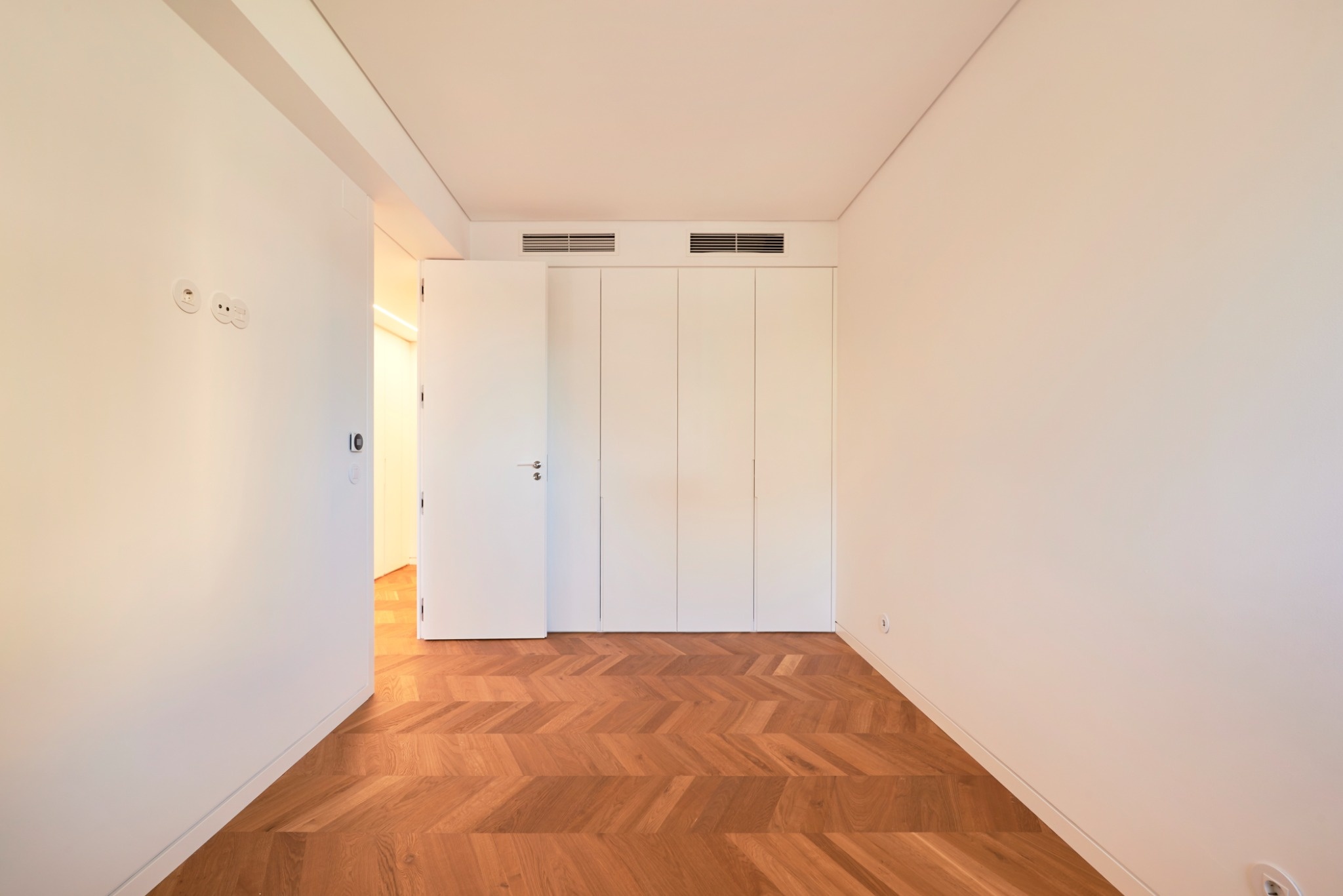
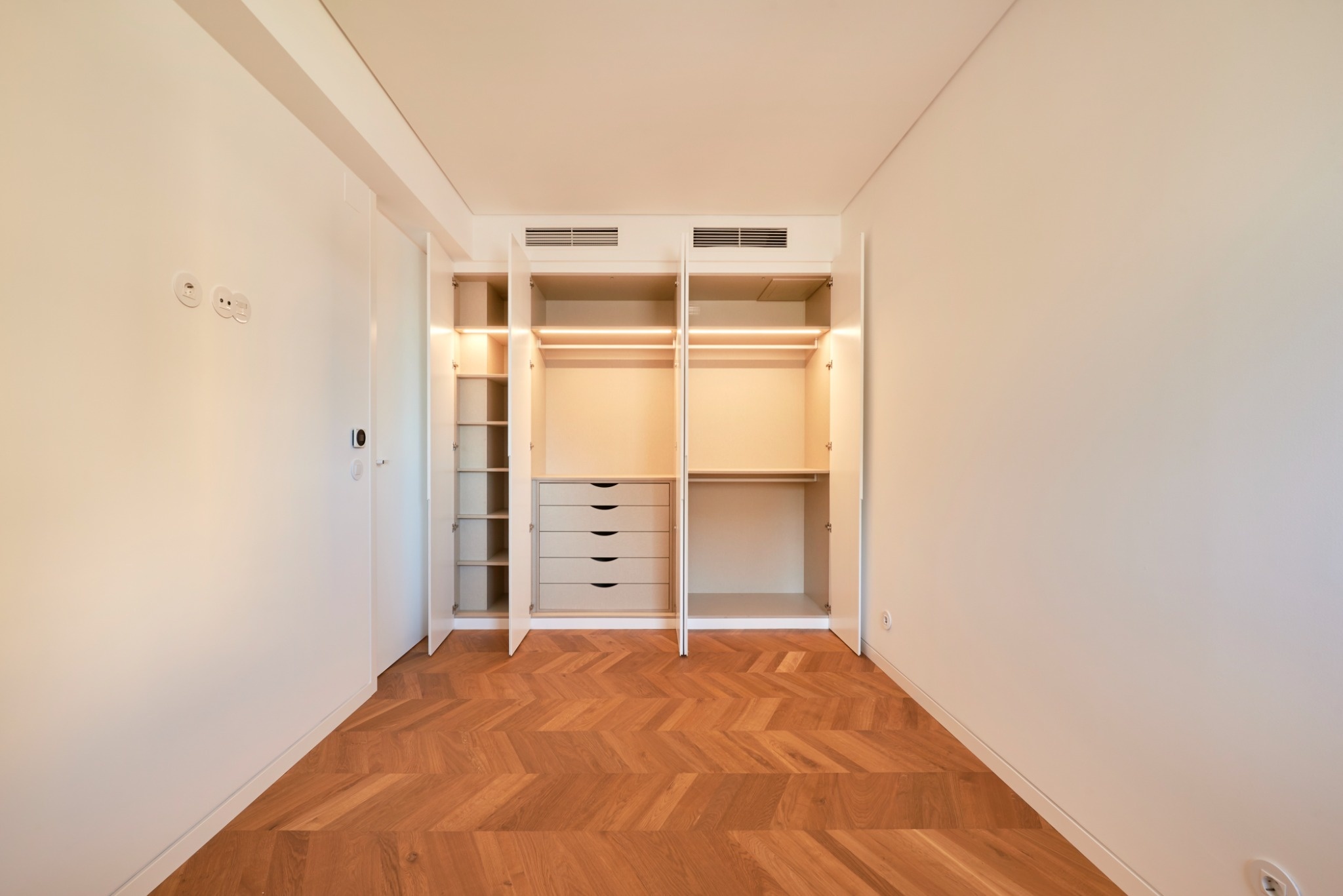
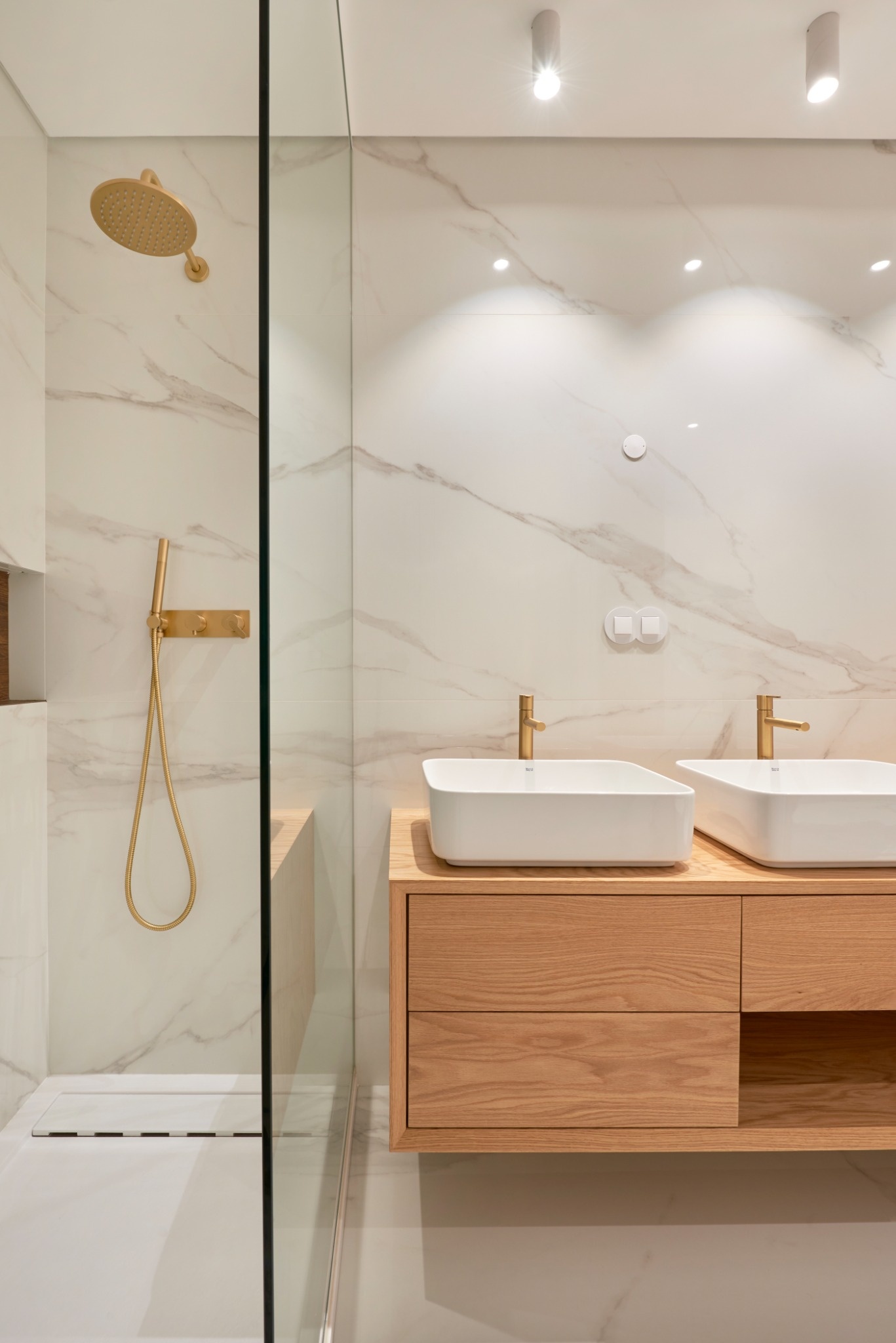
The floors in the bedrooms, living rooms, and kitchens feature oak wood flooring laid in a chevron pattern; the floors and walls of the bathrooms are partially covered with Kerlite ceramic tiles; the direct and indirect artificial lighting was the subject of a study on lighting comfort; the choice of floor-to-ceiling doors and handles by Siza Vieira followed the contemporary aesthetic of the design brief. Storage was thoroughly studied and optimized in every possible space. Furniture was designed and adapted to the existing space. For the air conditioning, since the goal was to keep spaces visually free of technical equipment, a solution was chosen featuring linear wall grilles with units installed at the top of the wardrobes.
Since the renovation work on the building’s facade was minimal, it focused solely on converting the rear of an old garage door into a bay window.