
Phase 3 of Cidade do Futebol marked the opening of the most ambitious—and most diverse—space within the Portuguese Football Federation’s complex in Caxias. Two buildings, two scales, two distinct programs that share a common identity and complement the FPF brand.
Designed by the RISCO architecture firm, Spacemakers was responsible for the interior design of the entire complex, which opened in November 2024.
The Futsal Pavilion — Arena Portugal
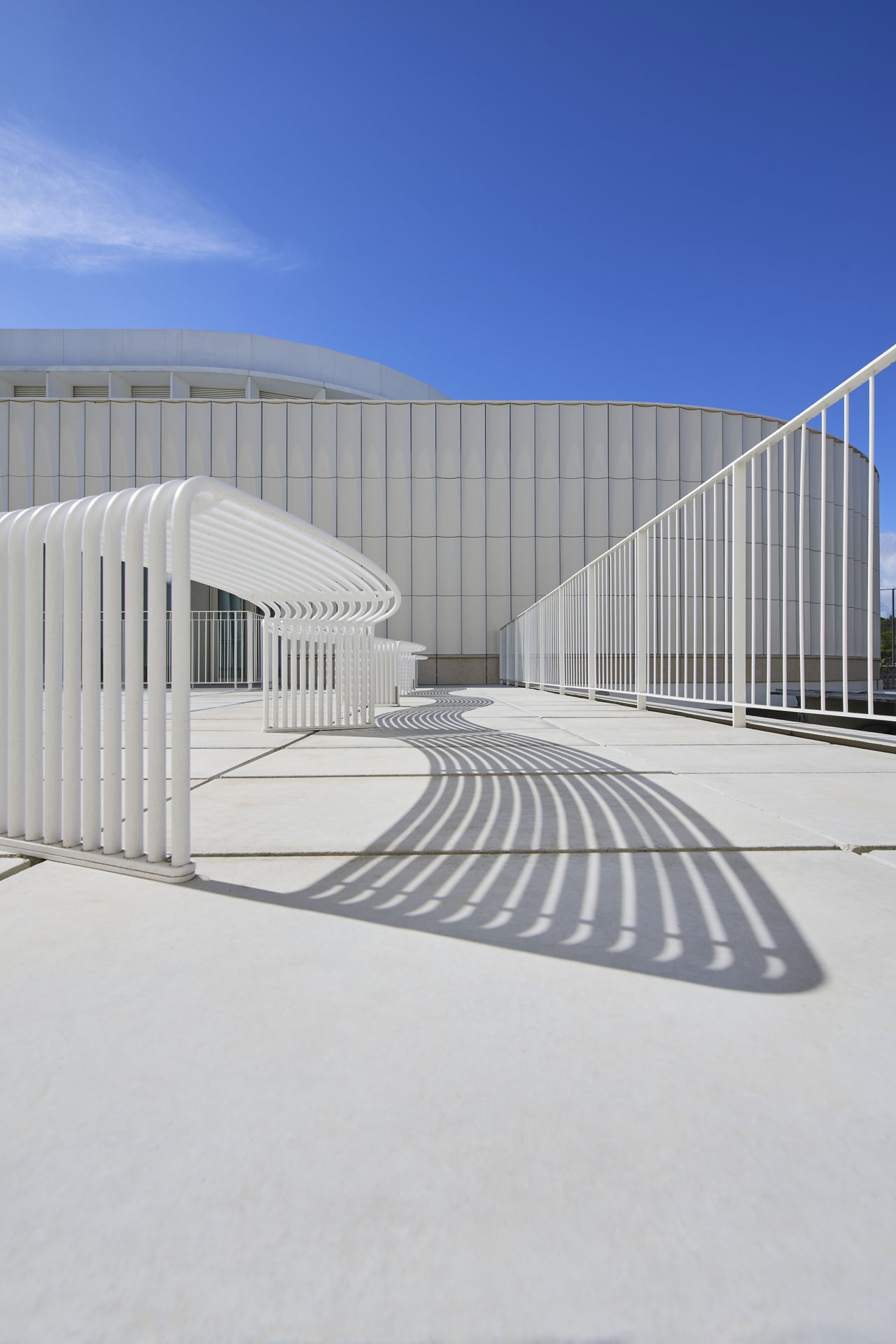
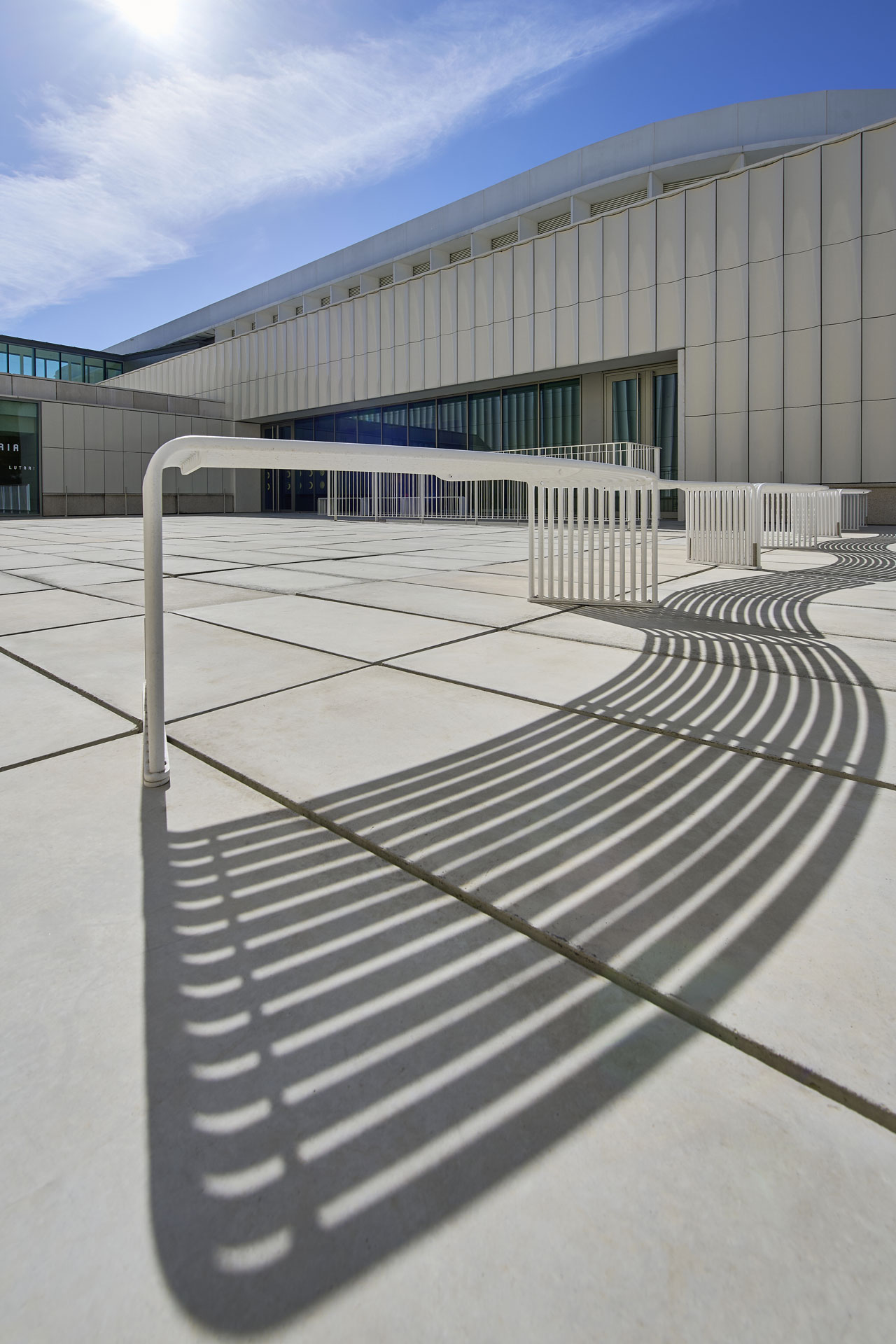
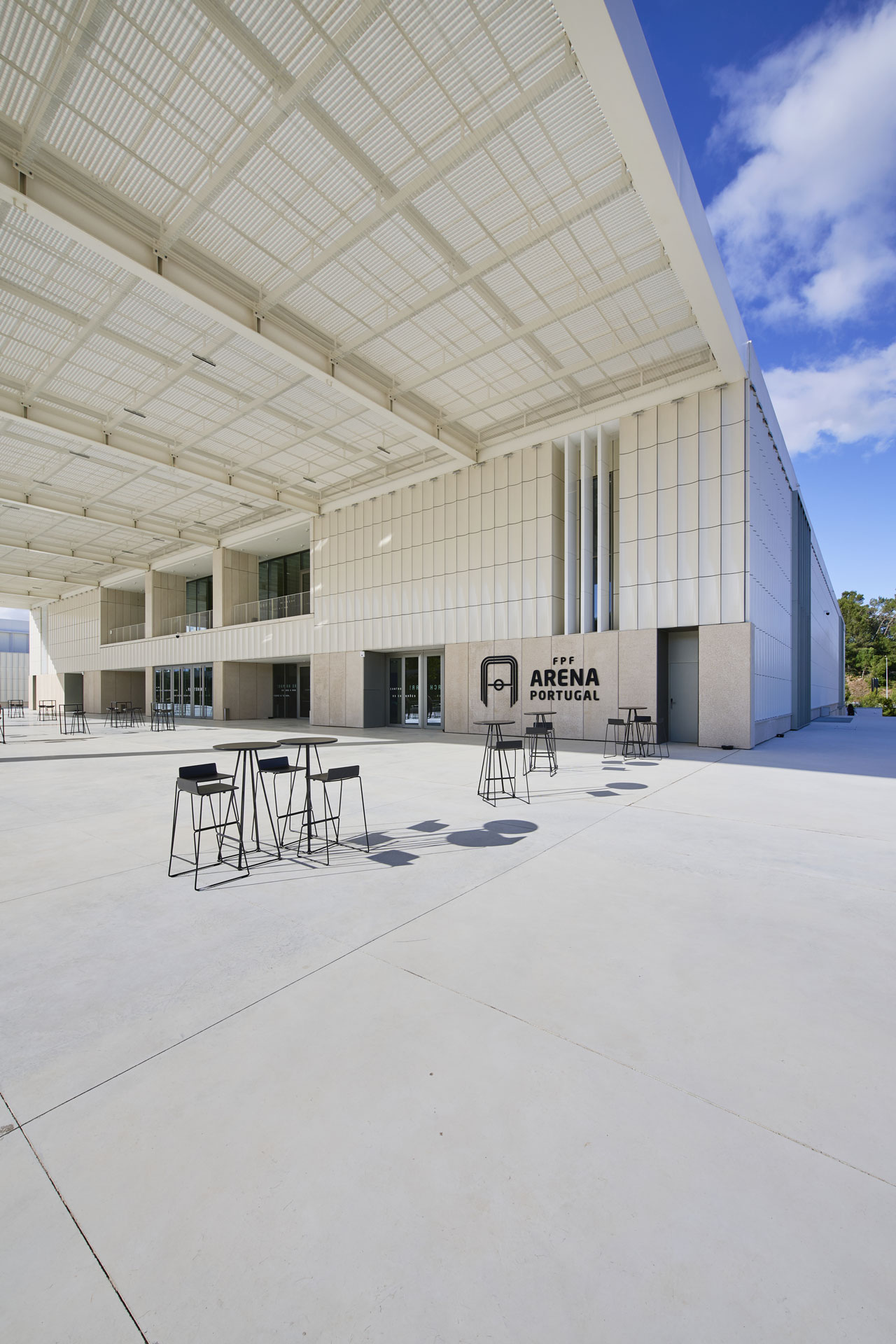
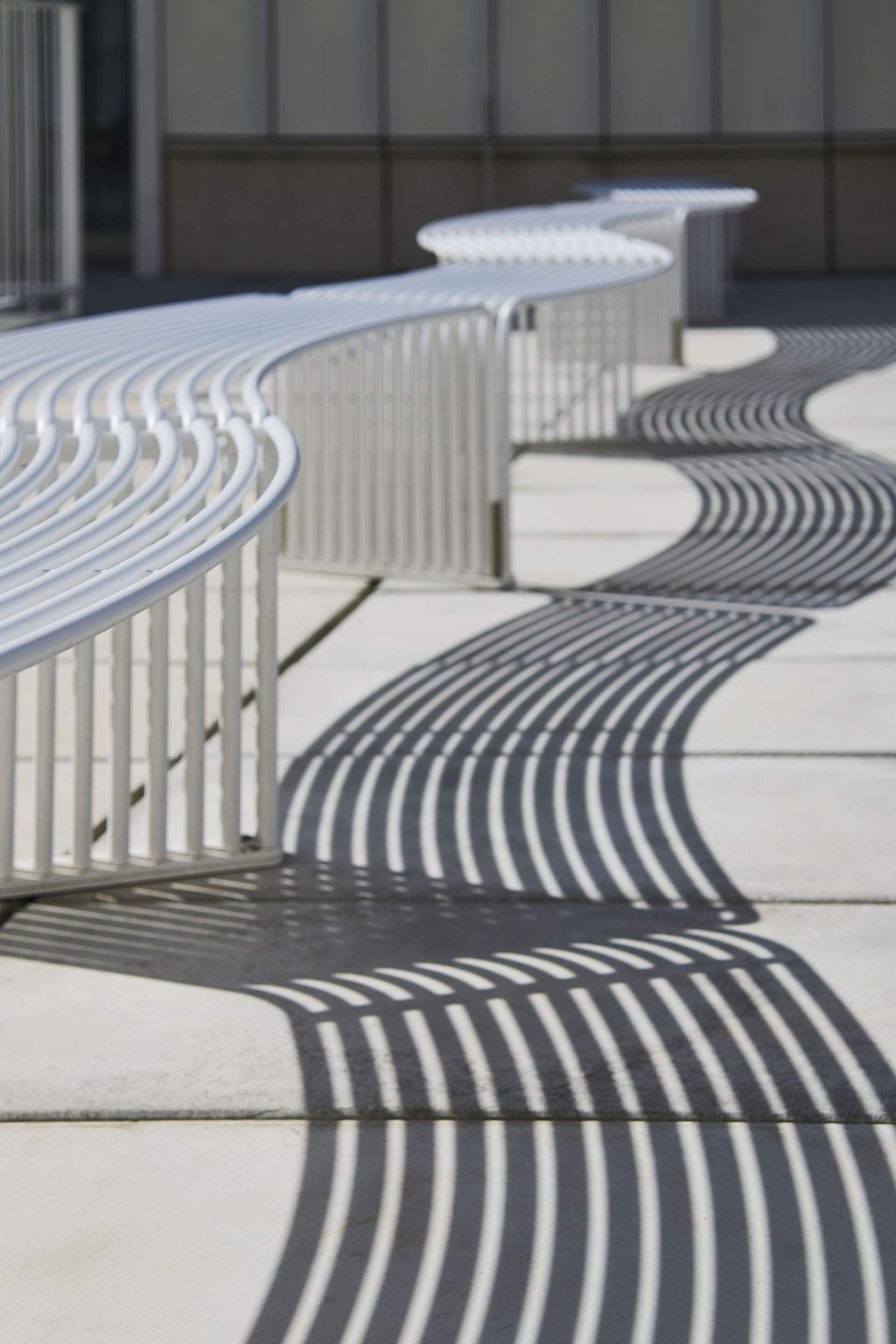
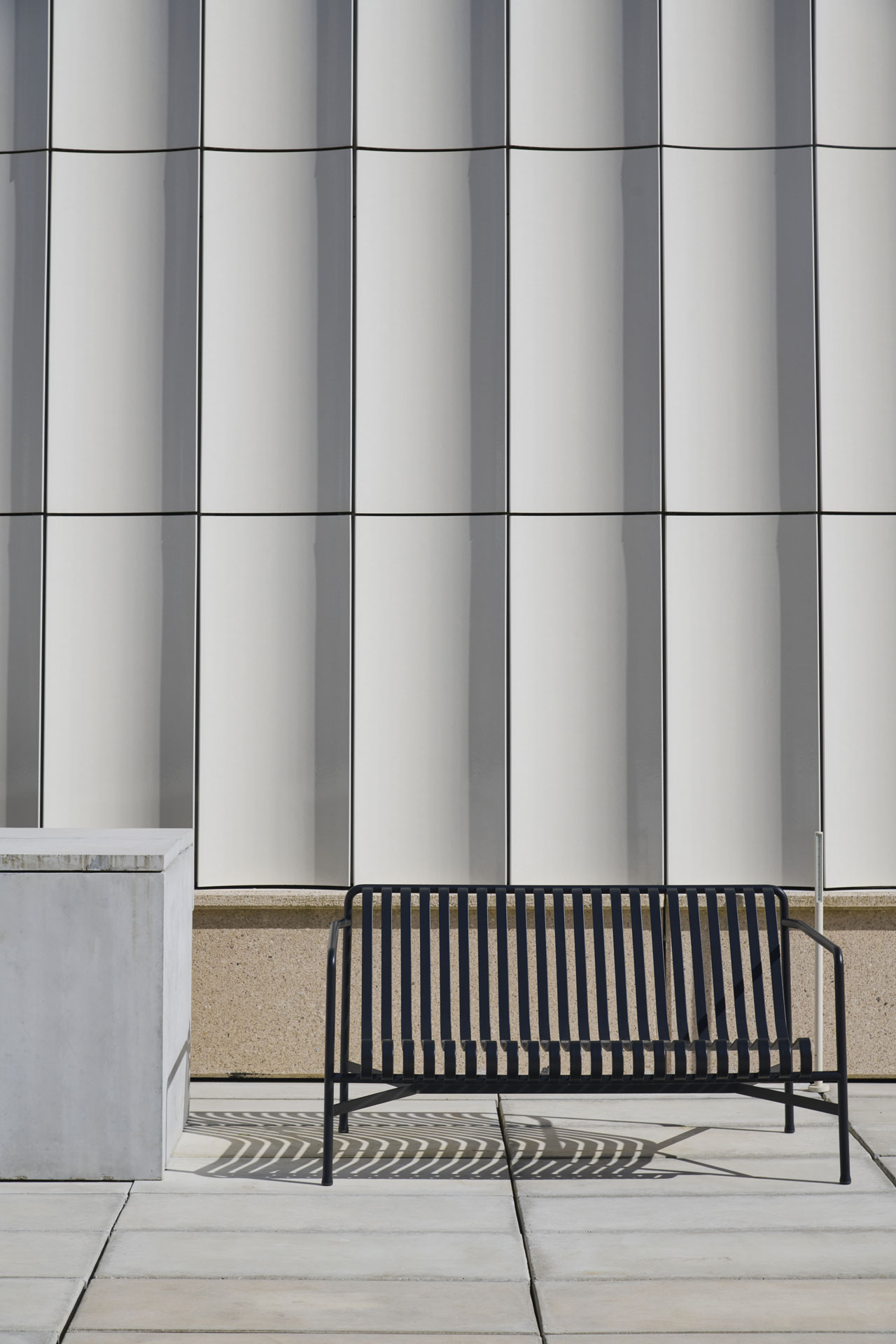
Even before you enter, the Arena building stands out for the scale and purity of its structure: the white steel roof that soars over the outdoor terrace, creating an architectural experience that transcends mere function. In selecting the outdoor furniture, the Spacemakers studio responded to this rhythm—the sinuous, undulating white metal benches echo the language of the façade and cast upon the concrete the same interplay of light and shadow that the structure itself creates. A sensitivity to the building that begins on the outside and permeates every space.
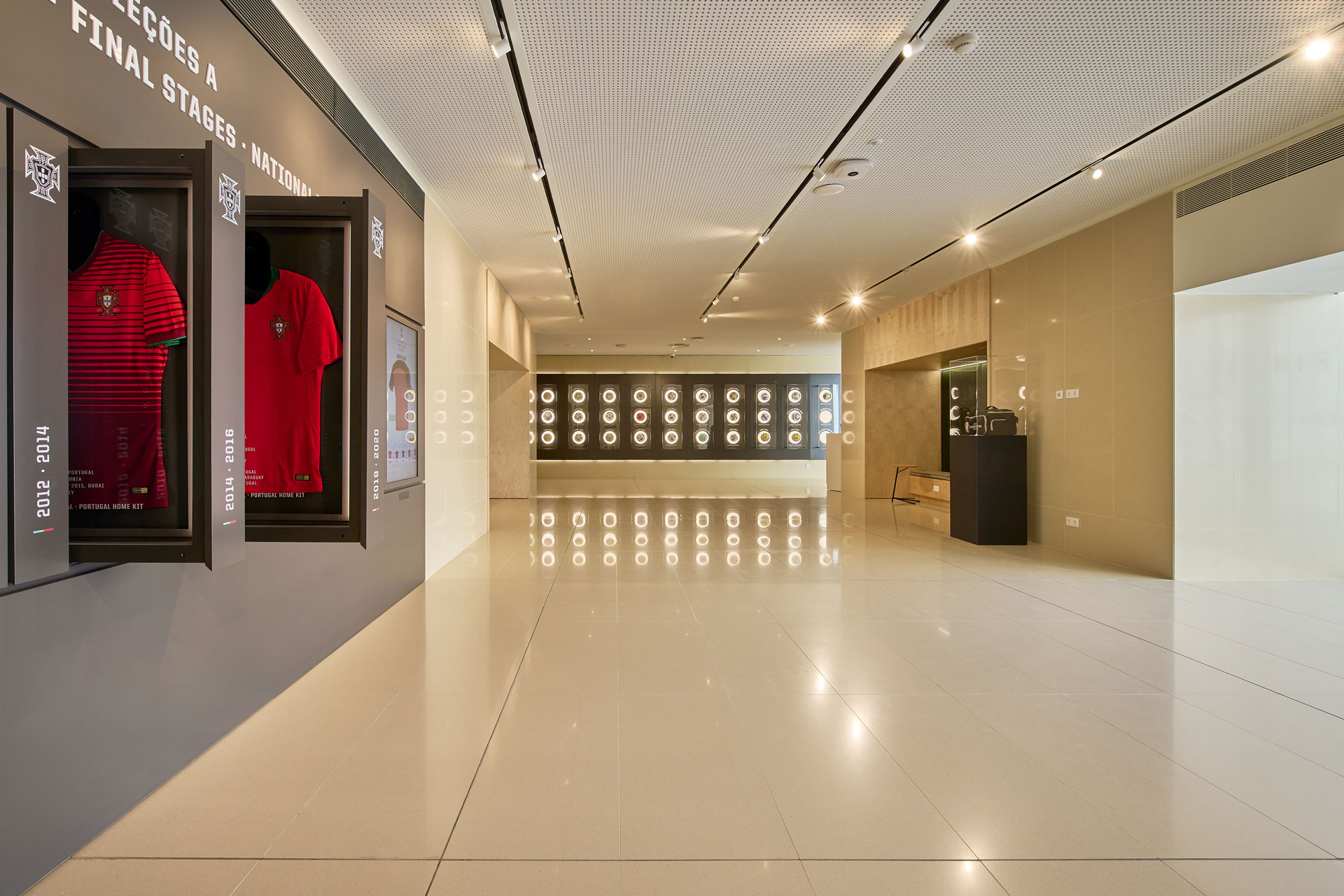
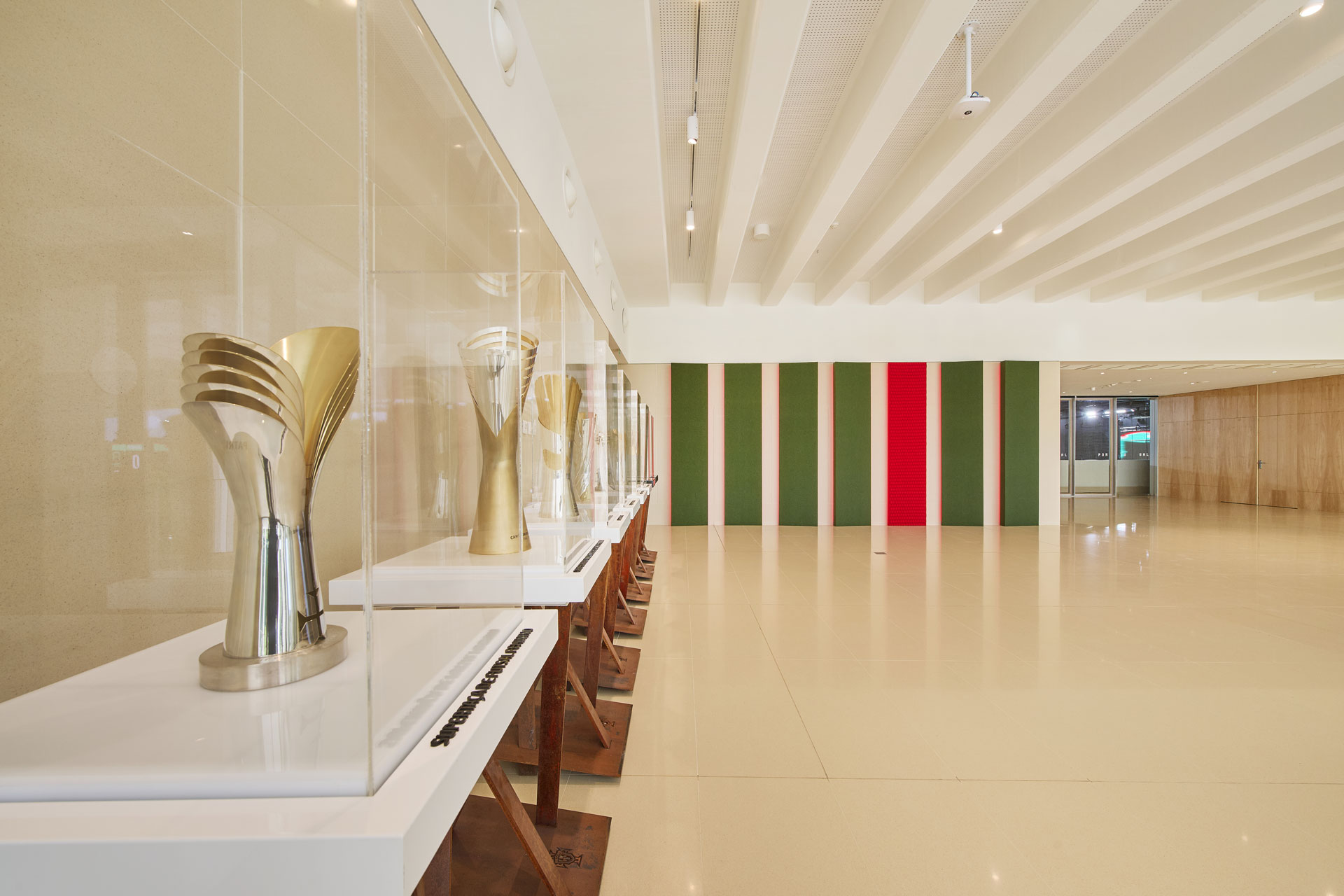
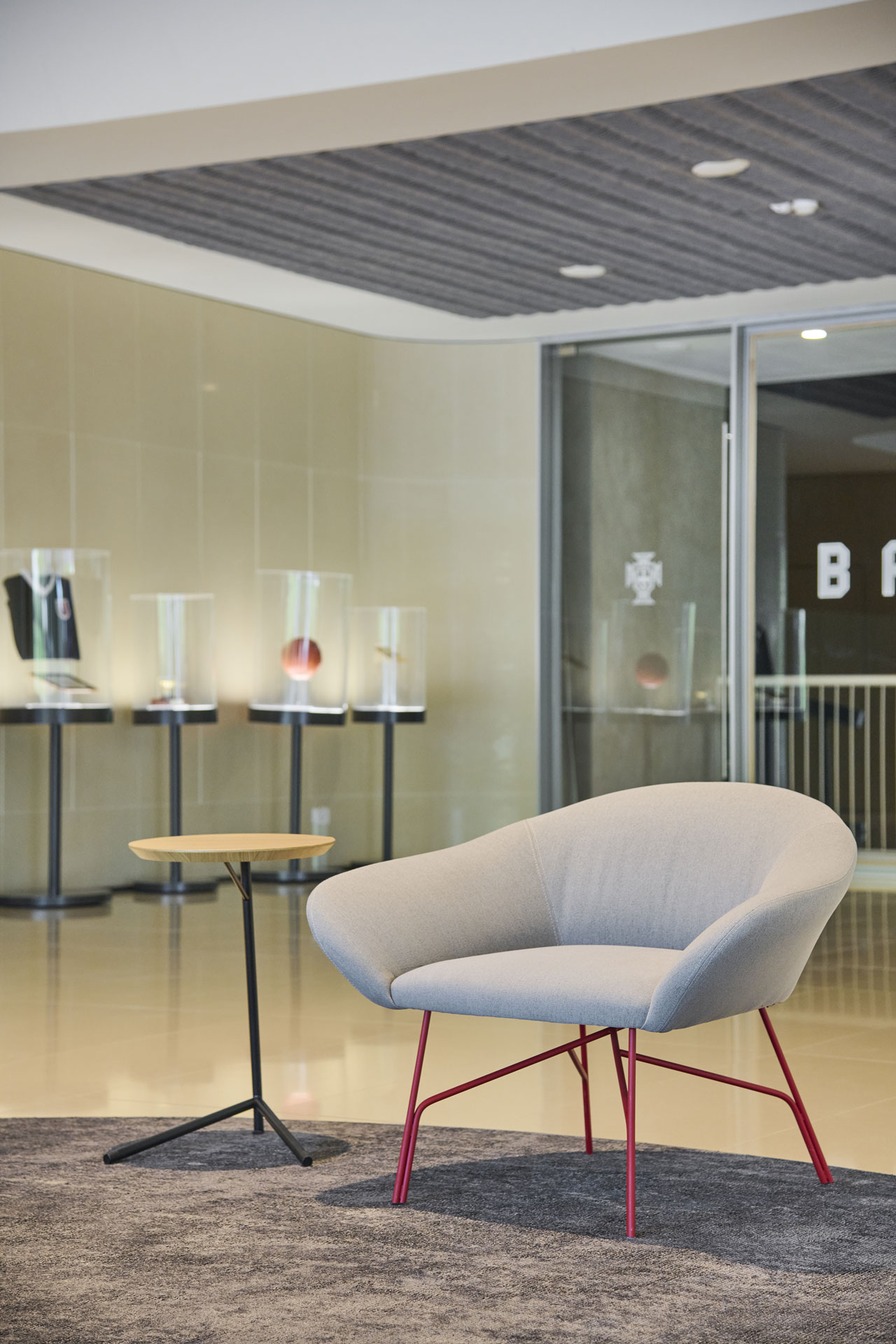
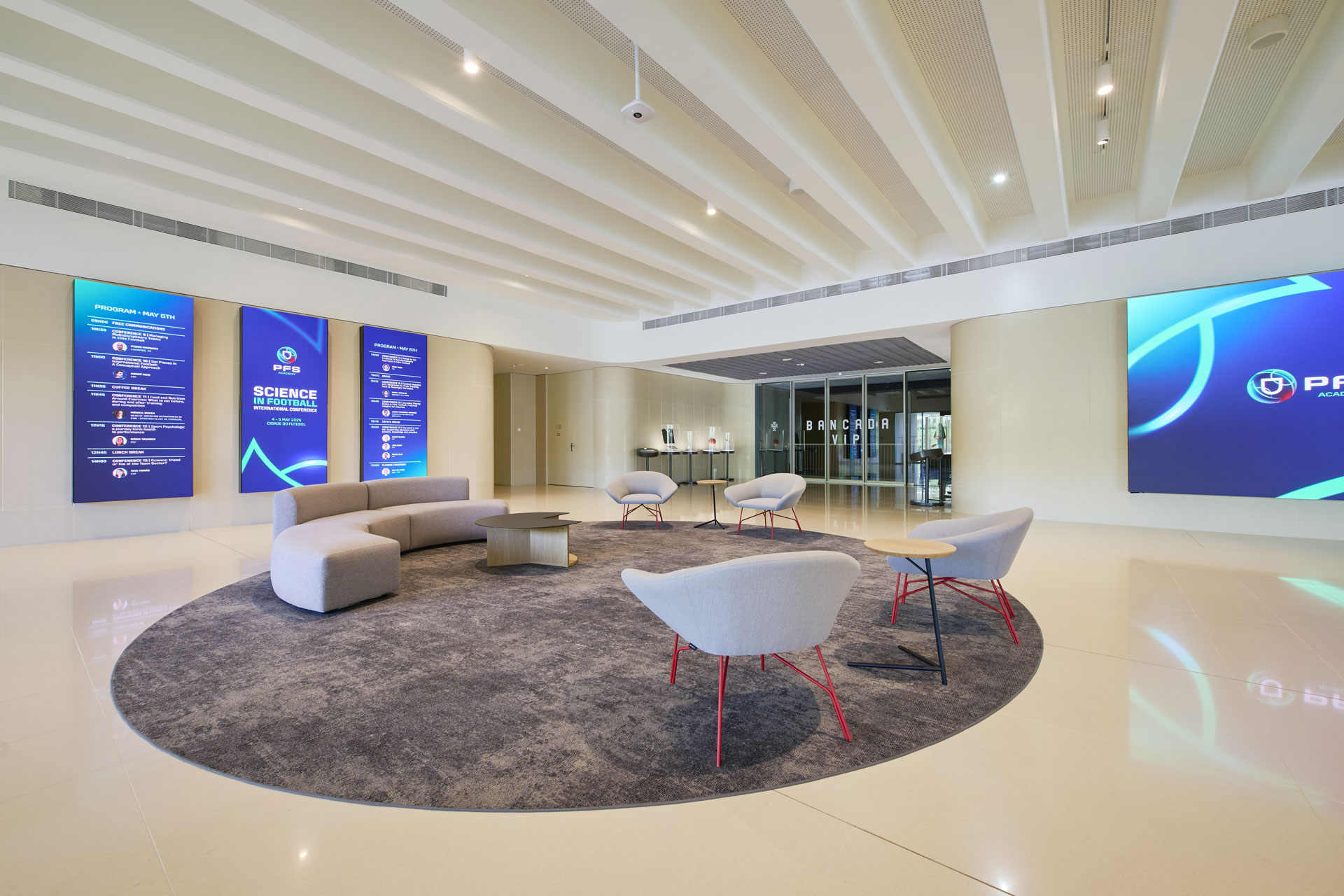
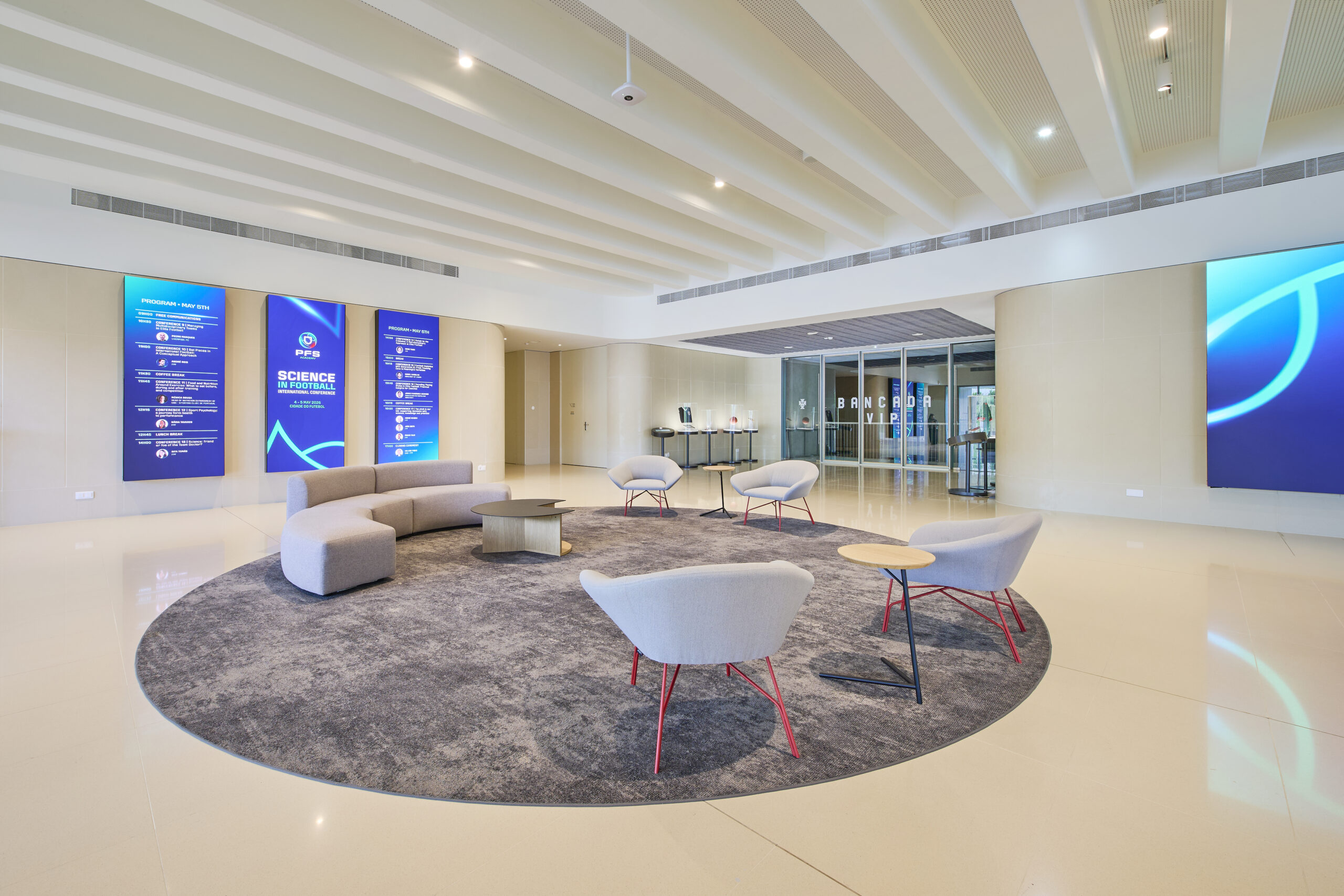
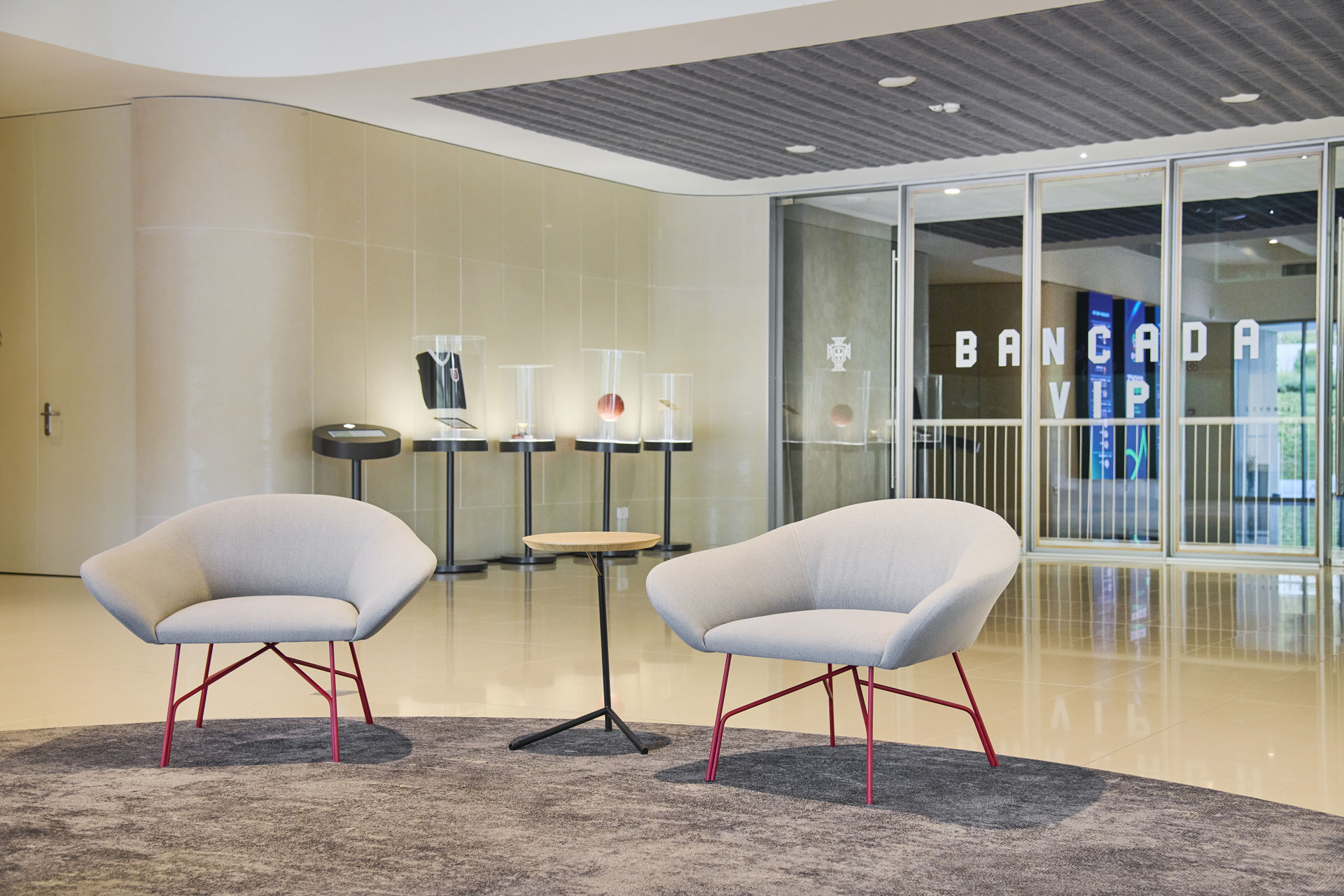
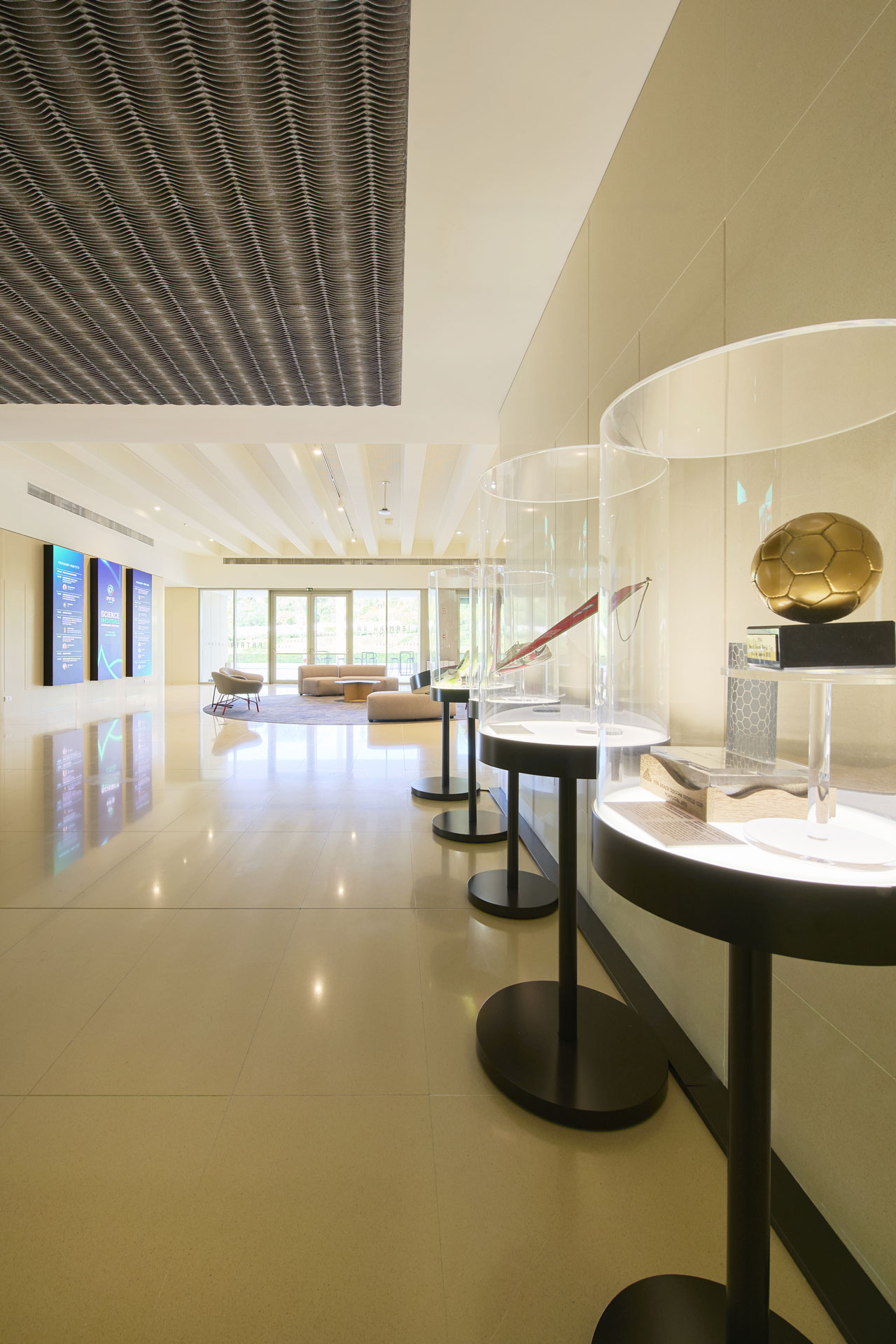
Inside, the tour begins in the foyer, a reception and circulation area where lighted display cases showcase trophies and memorabilia from Portuguese soccer, flanked by a ceiling featuring three-dimensional geometric acoustic wool panels by Burel, which absorb sound and frame the view. The gallery opens onto the futsal pavilion, the heart of the building.
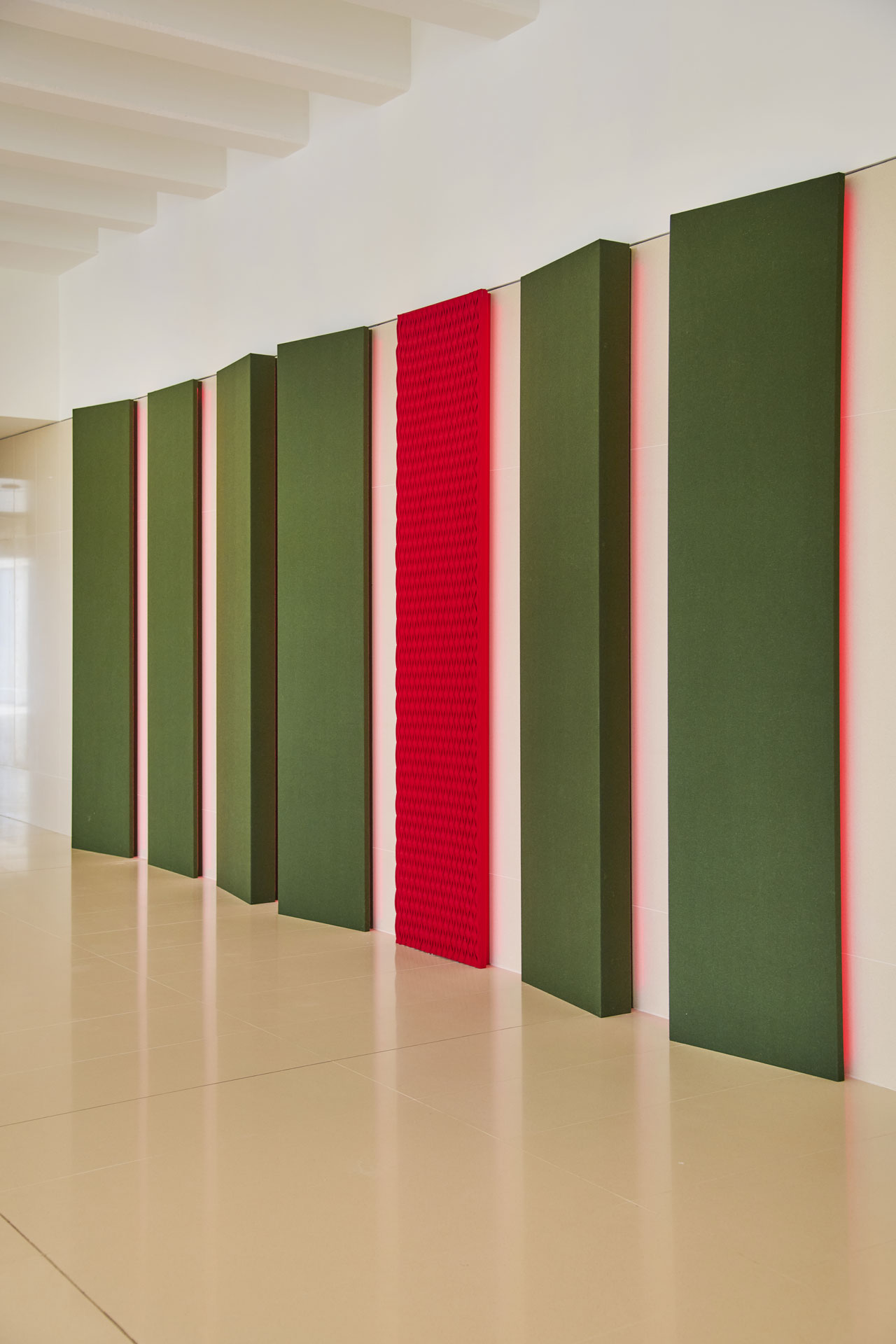
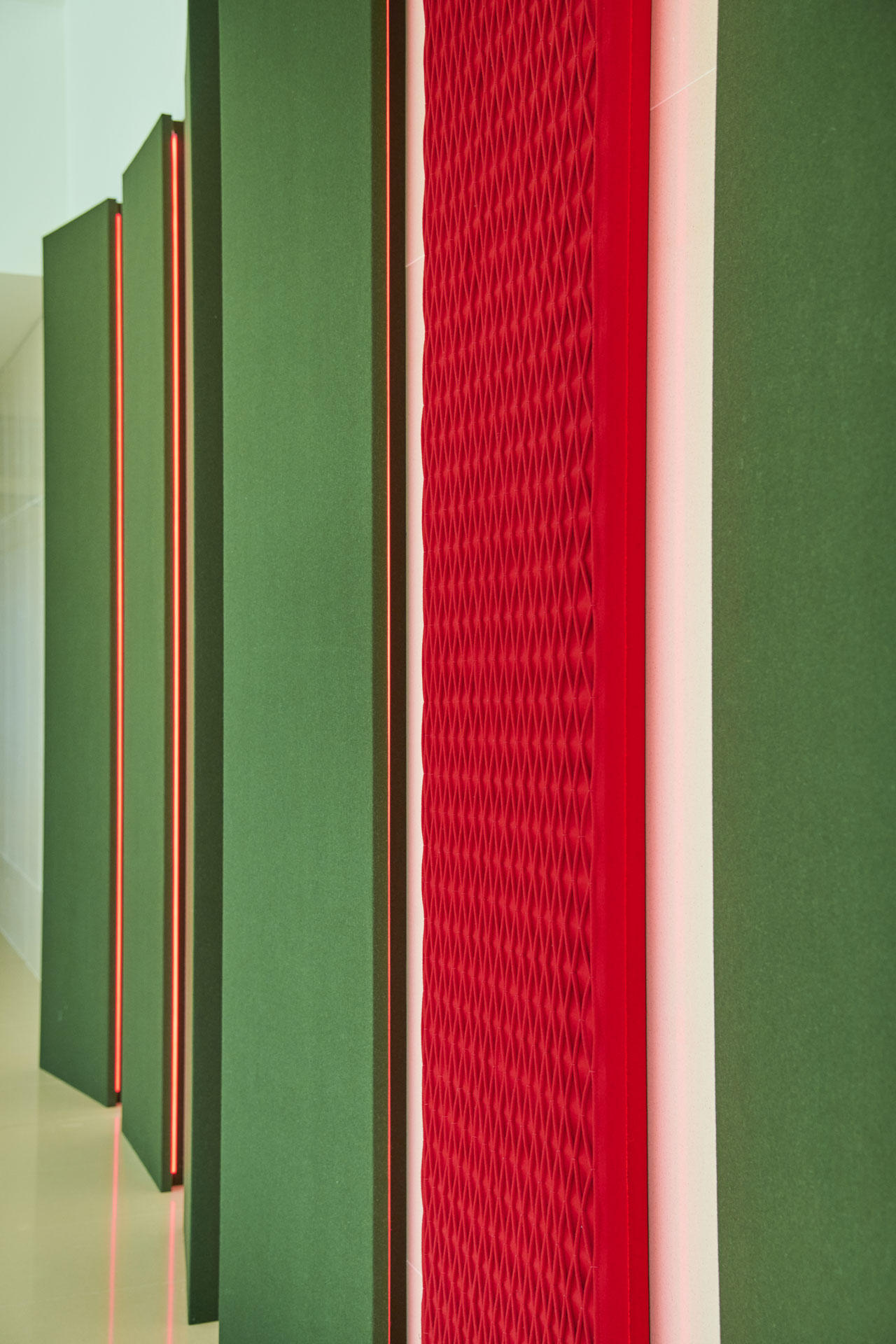
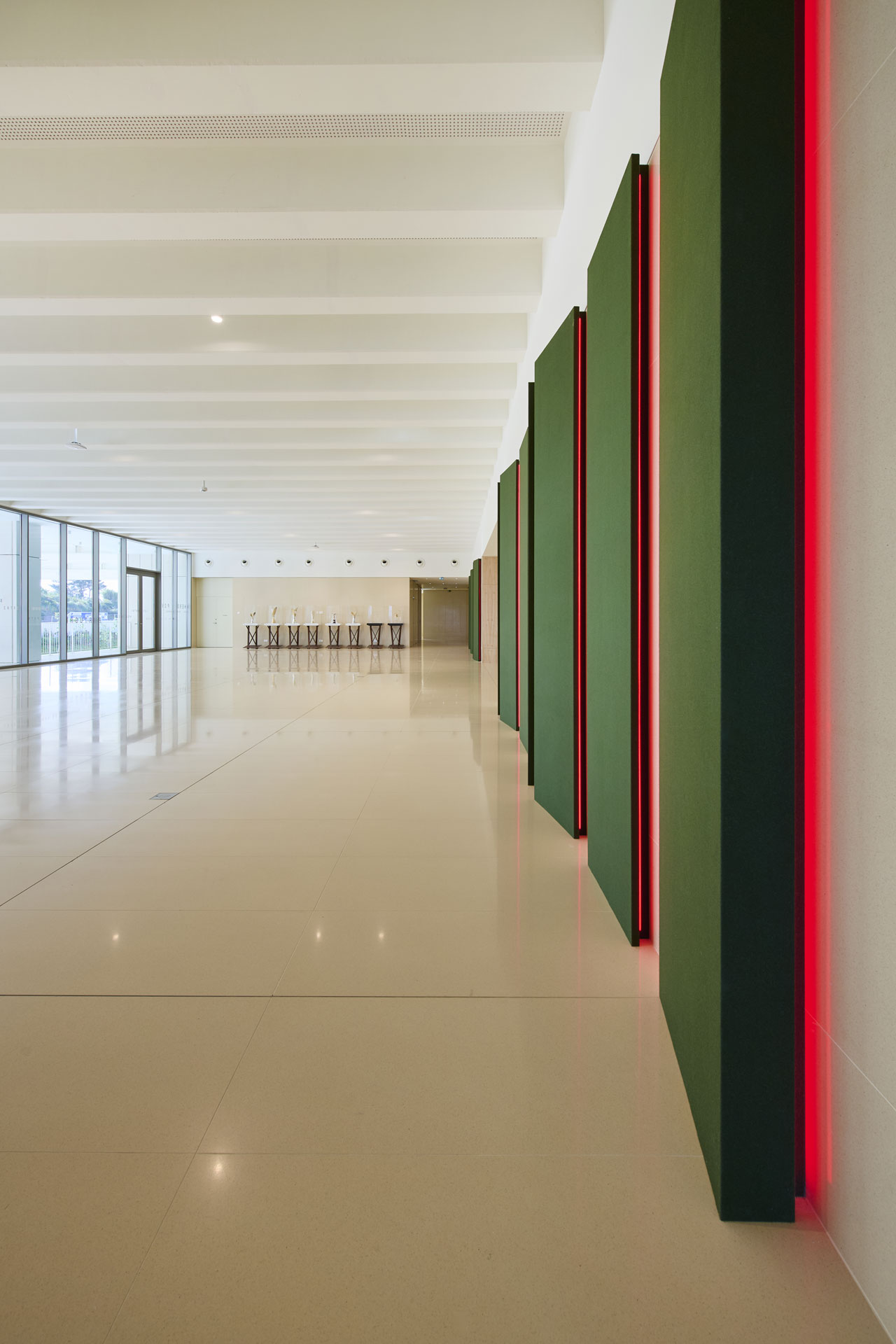
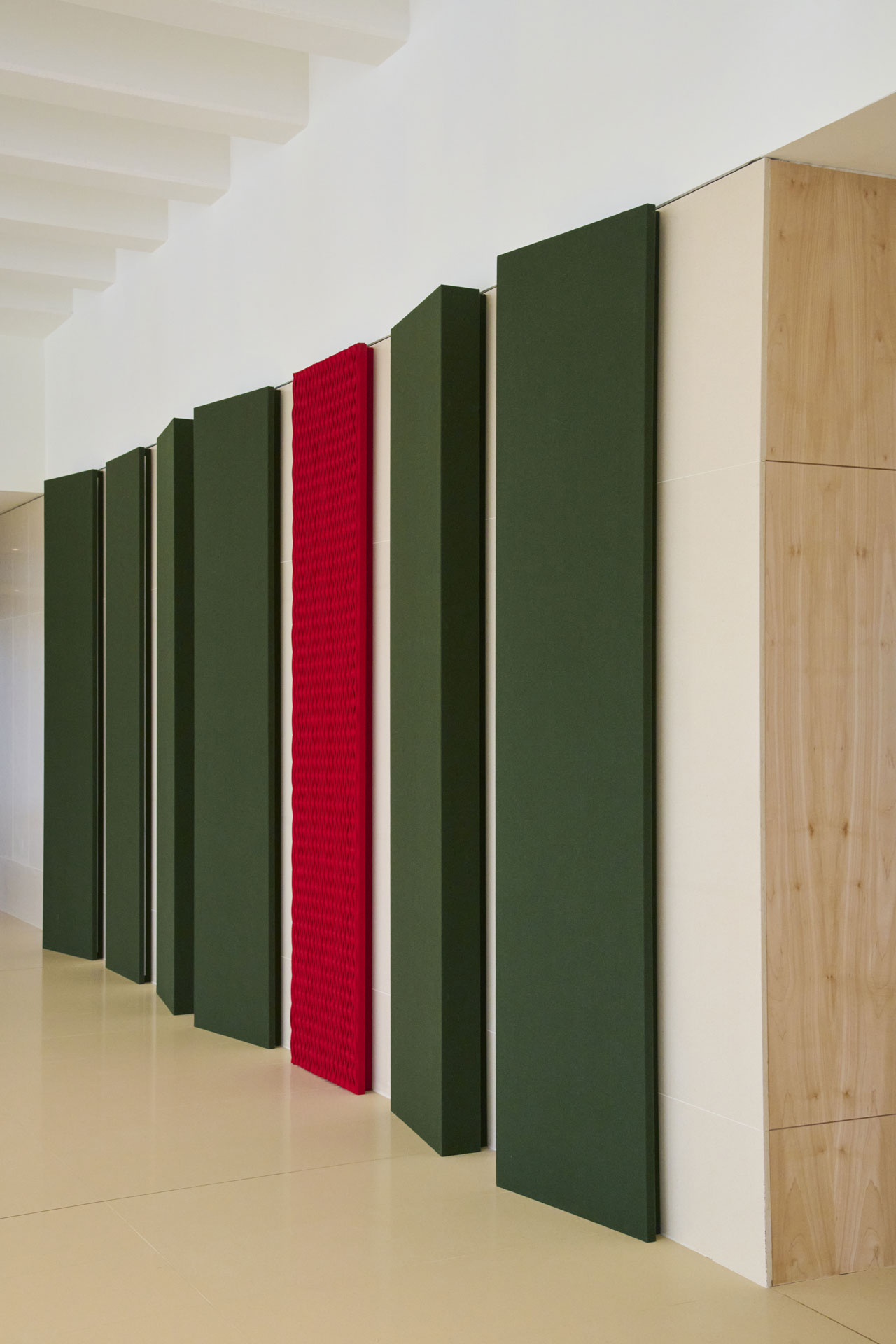
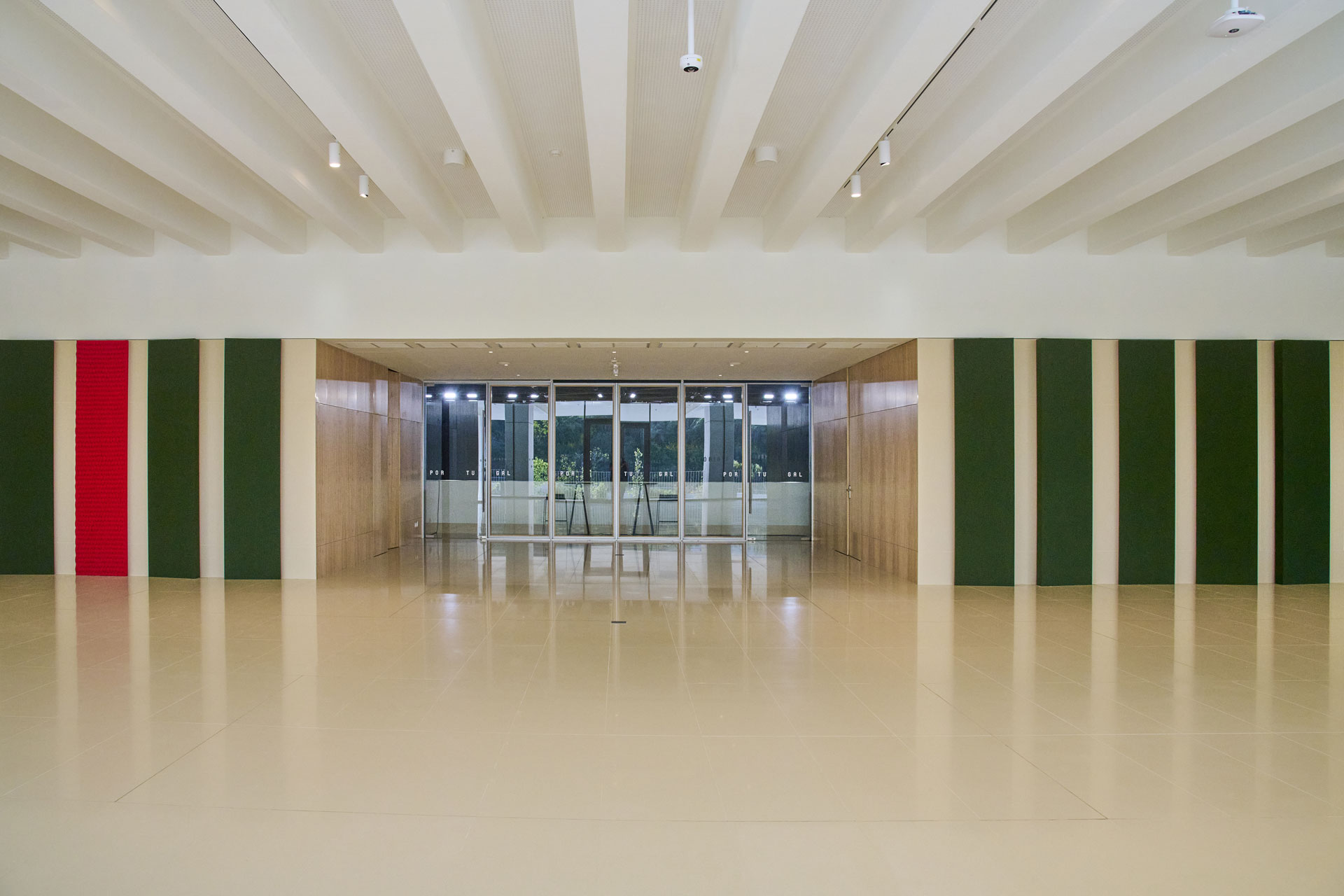
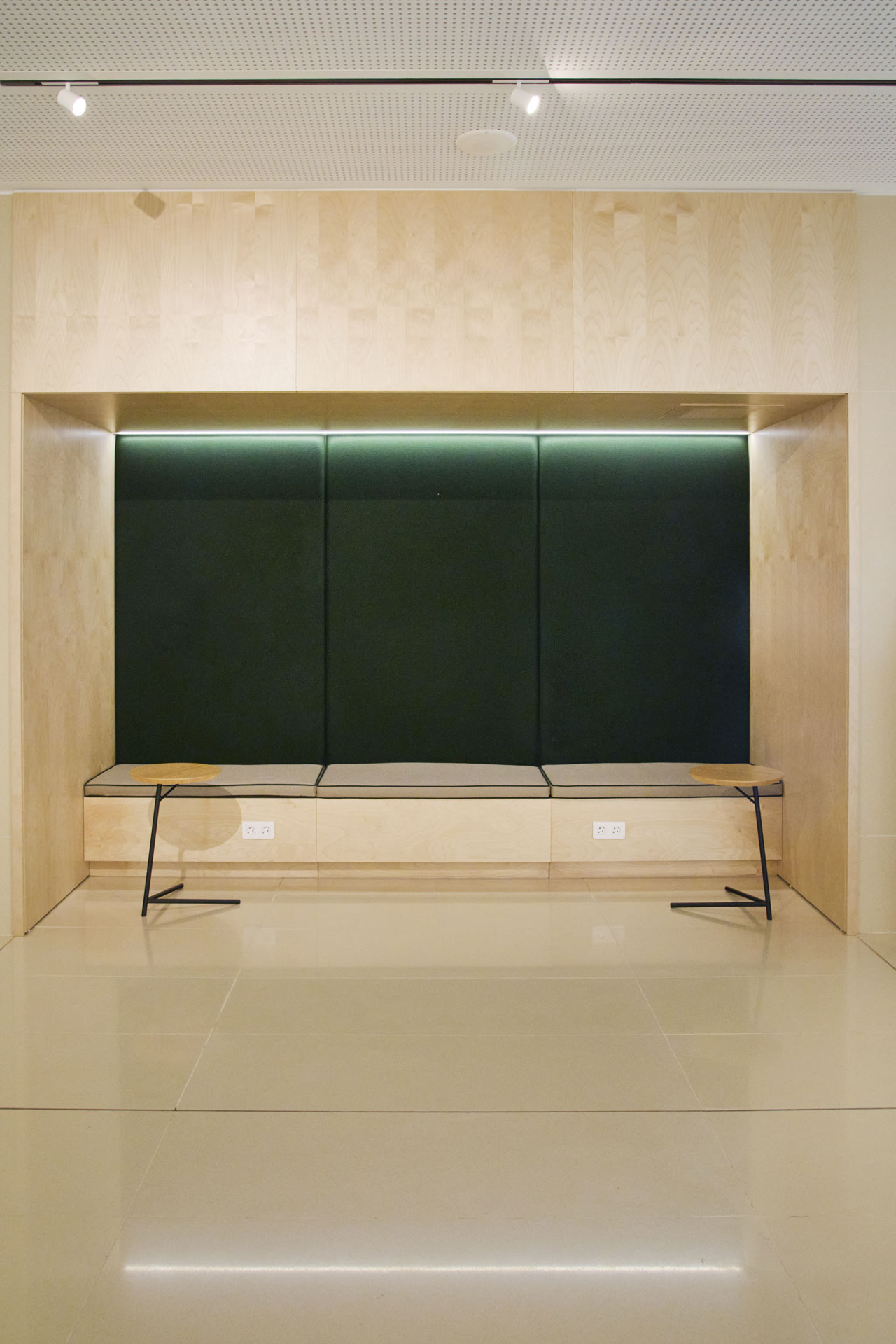
On the upper level of the gallery, a long, light-filled space features a cream-colored polished stone floor, a ceiling with integrated lighting tracks, and, along an entire wall, dark green acoustic panels with LED backlighting—the colors of Portugal transformed into interior architecture. The space was designed to host everything from friendly matches and promotional events to conferences and institutional initiatives, with complete flexibility in its configuration.
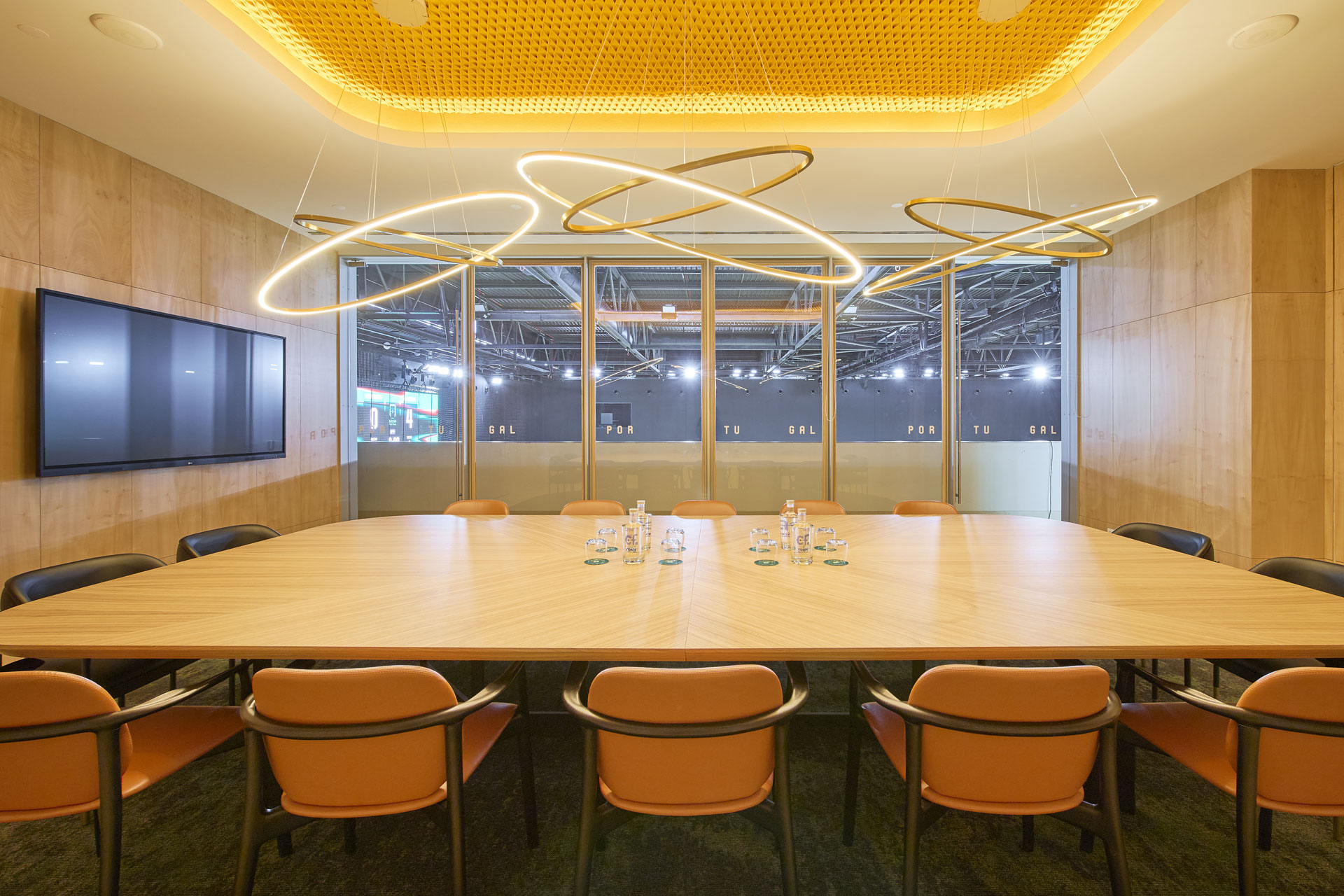
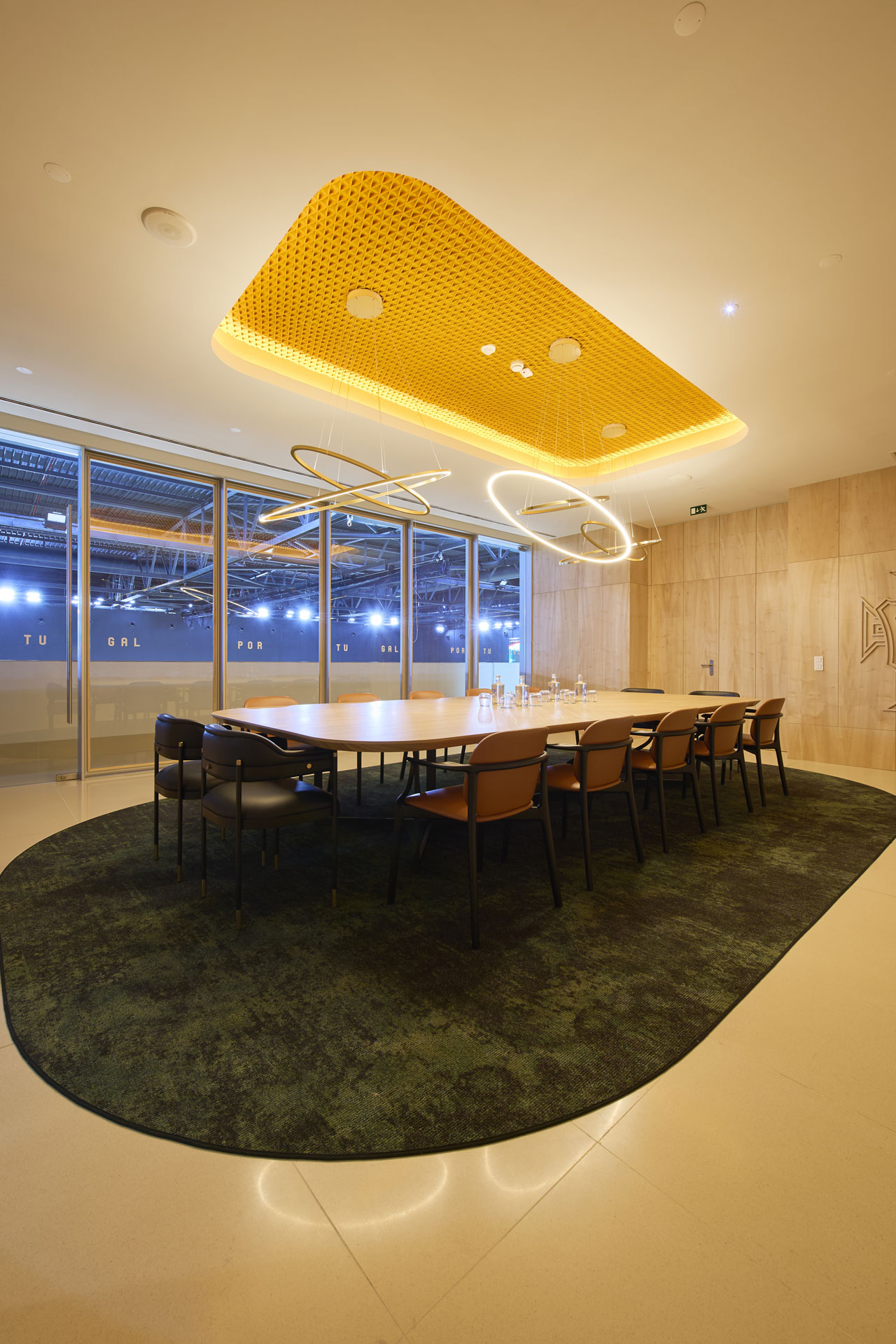
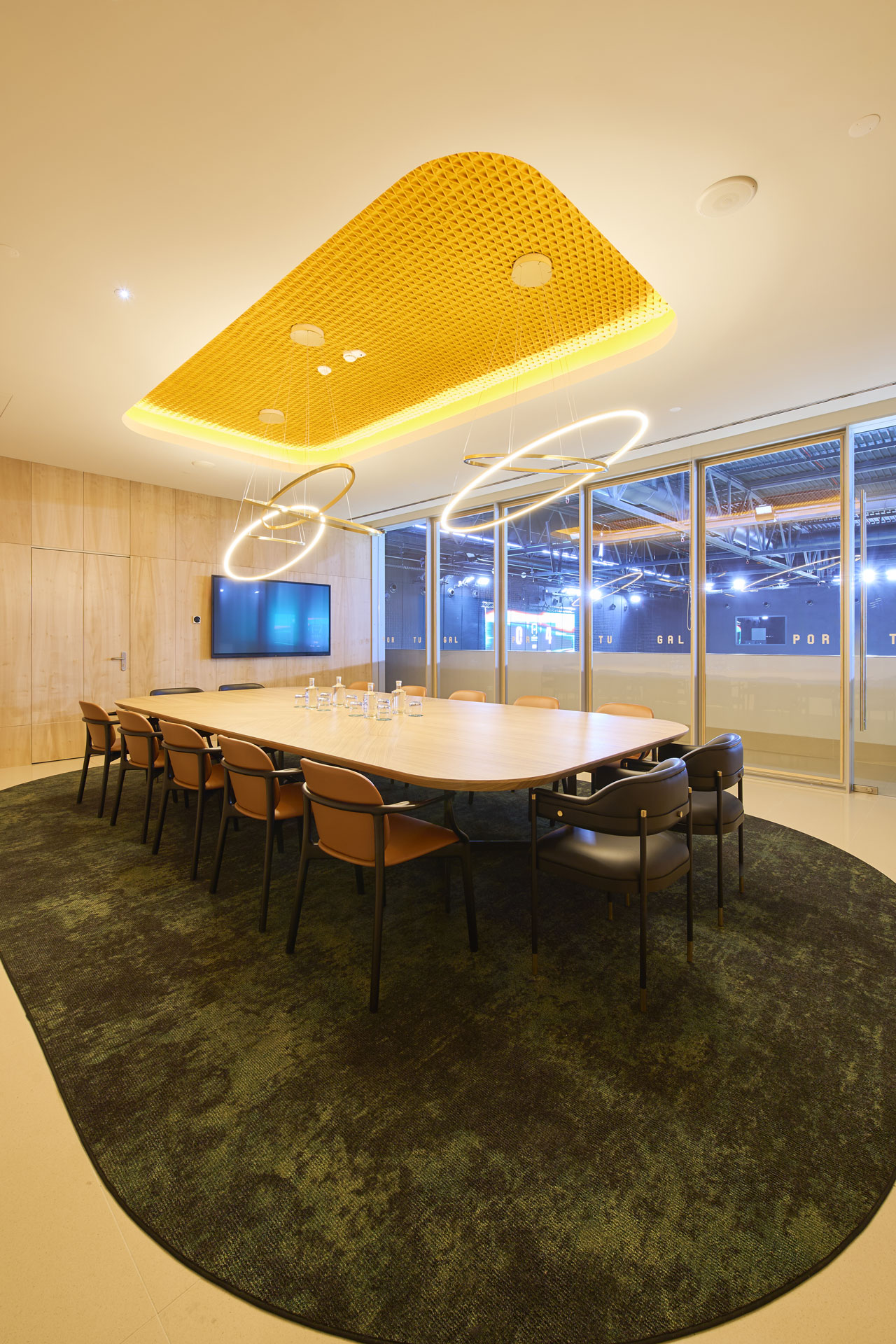
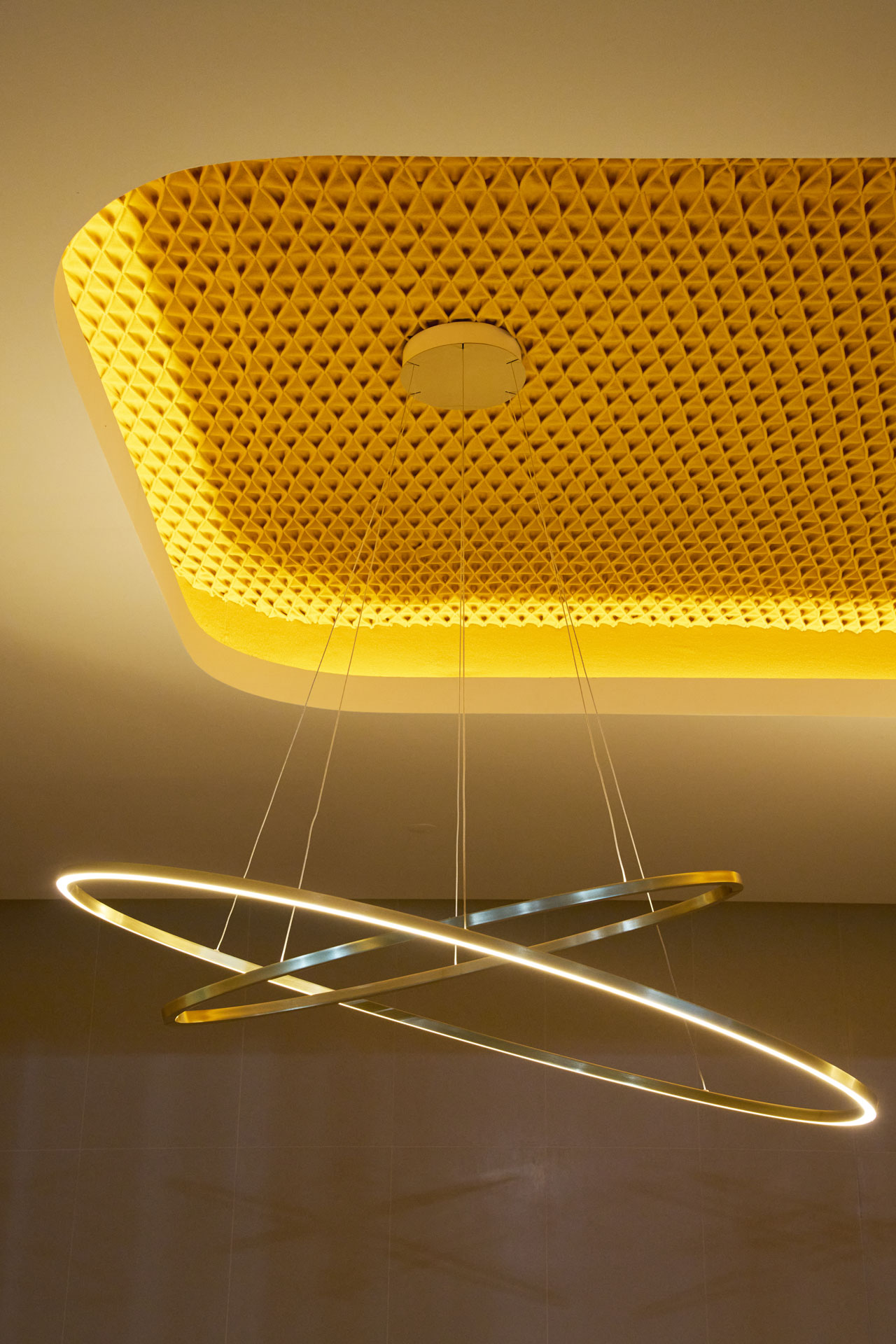
The VIP area is the project’s most unique space. An organically shaped crown molding, clad in Burel’s three-dimensional geometric panels in a vibrant yellow, floats above the room like a standalone sculptural element. Hanging from it are three pendants made of intertwined golden metal rings—an orbital composition that plays with the concept’s circular geometry. The large, custom-designed walnut table anchors the space; surrounding it are chairs upholstered in caramel-colored leather with dark metal frames. On the floor, a dark green oval tapestry—a direct reference to the grass—creates a symbolic playing field within the room. The natural oak wall, engraved with the FPF emblem, frames the space on the right. And on the left, the window spans the entire height: the counter opens directly onto the illuminated interior of the Arena, where the letters “PORTUGAL” run along the track’s ring. The meeting takes place with the game as a backdrop.
The Canal 11 Building and the International Football School
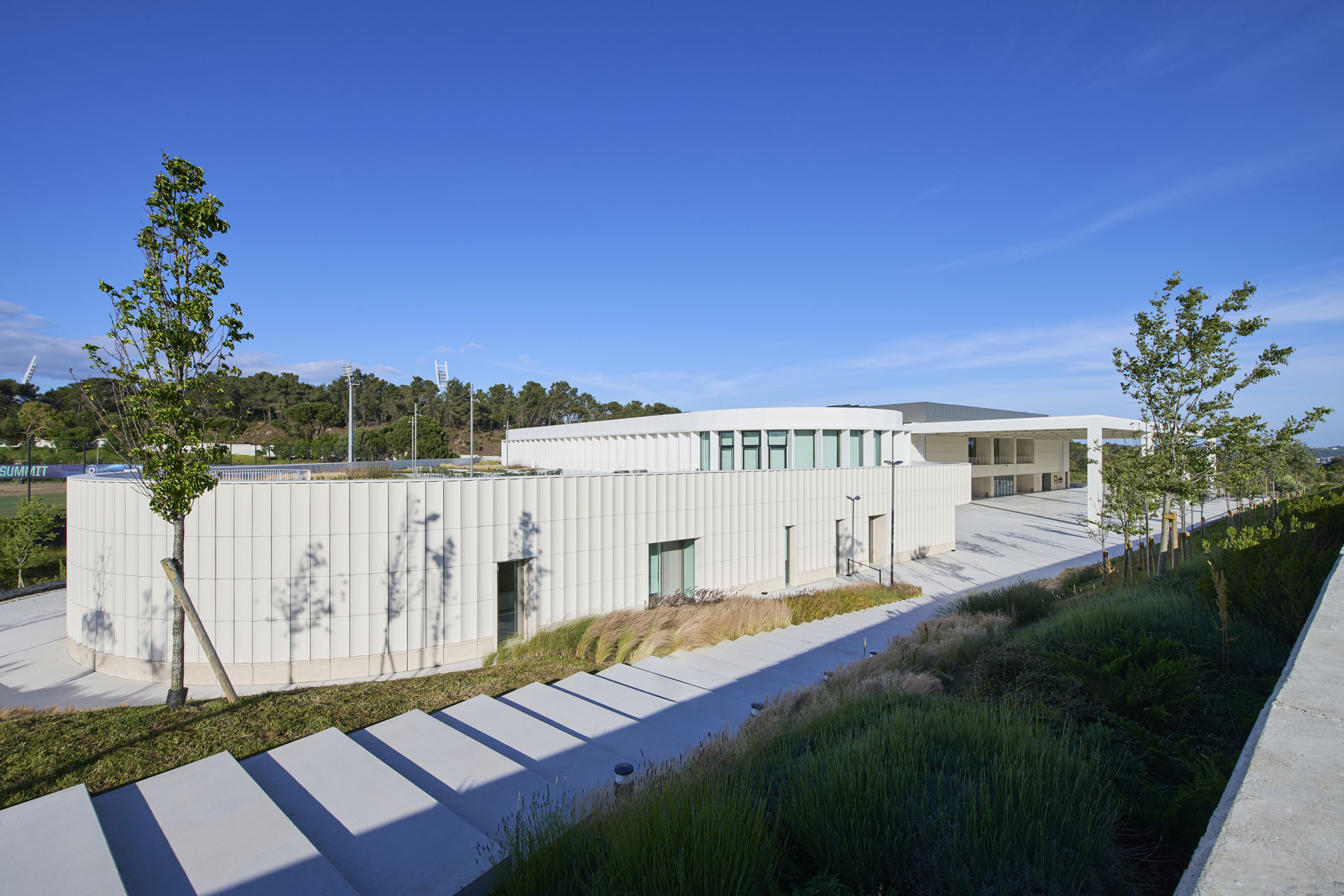
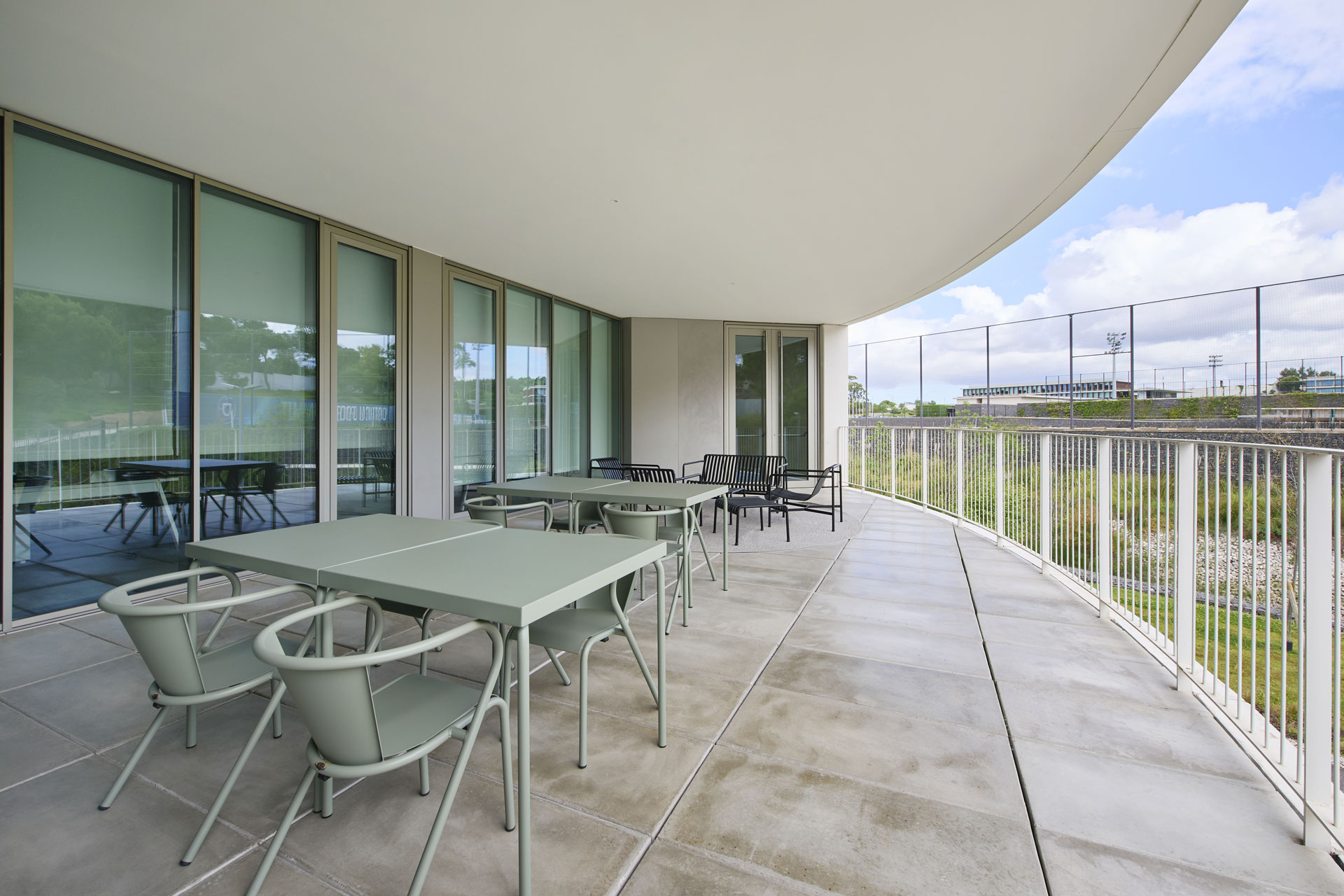
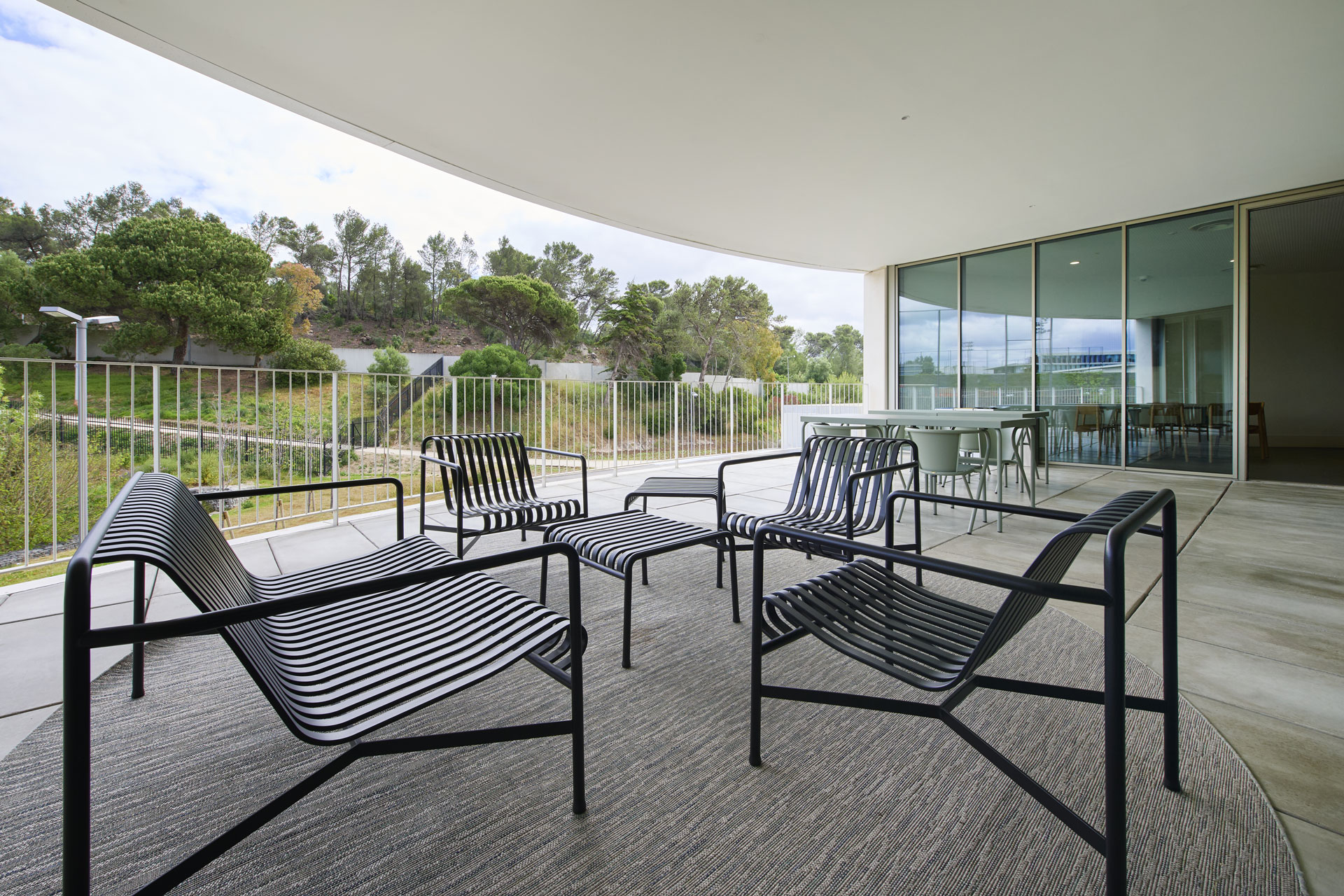
The second building, with its curved shape, houses the headquarters of Canal 11 and the facilities of the International Football School. The rounded form is a constant and defining feature—in the continuous balconies facing the training fields, in the interior spaces, and in the finishes that follow the curvature of the walls.
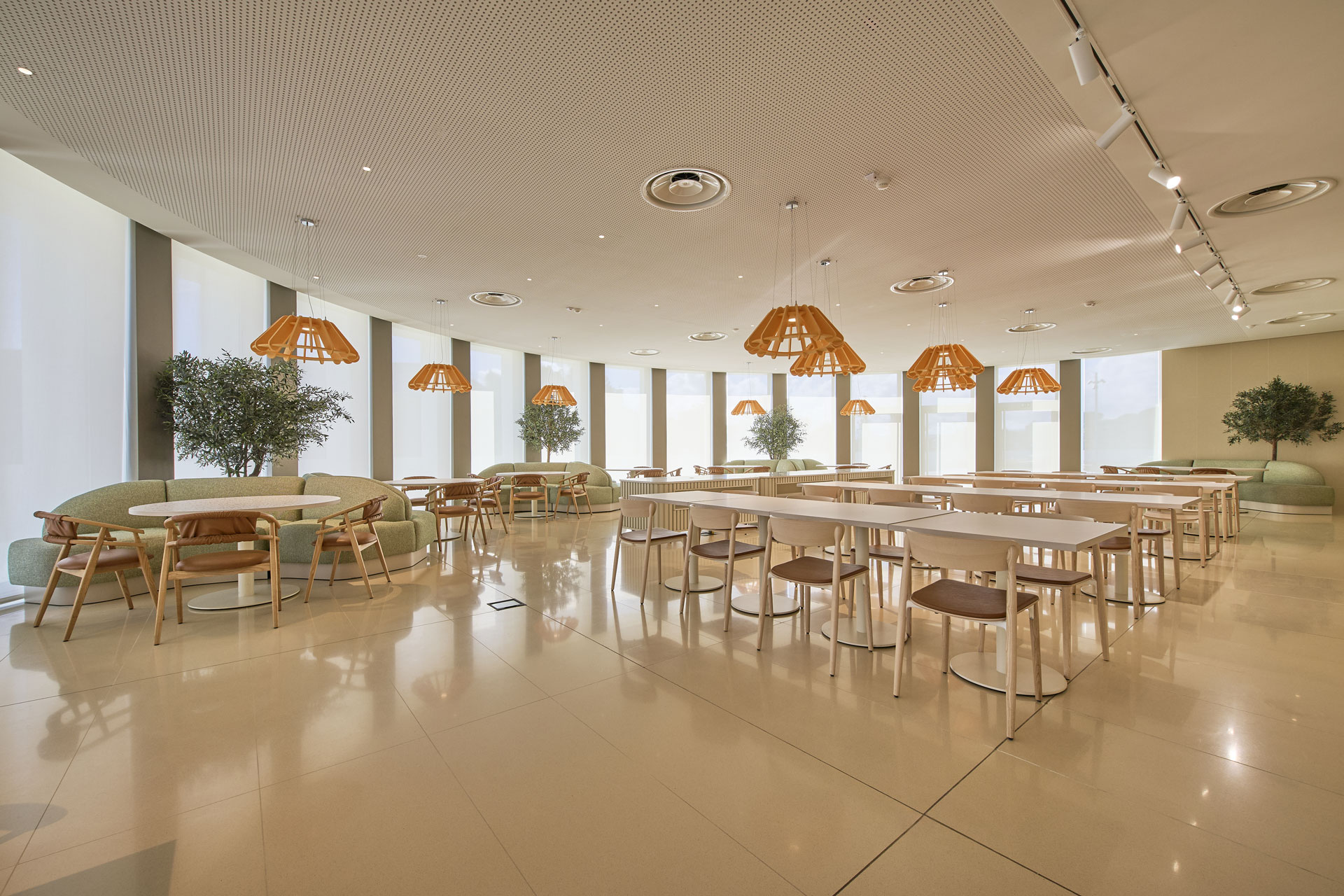
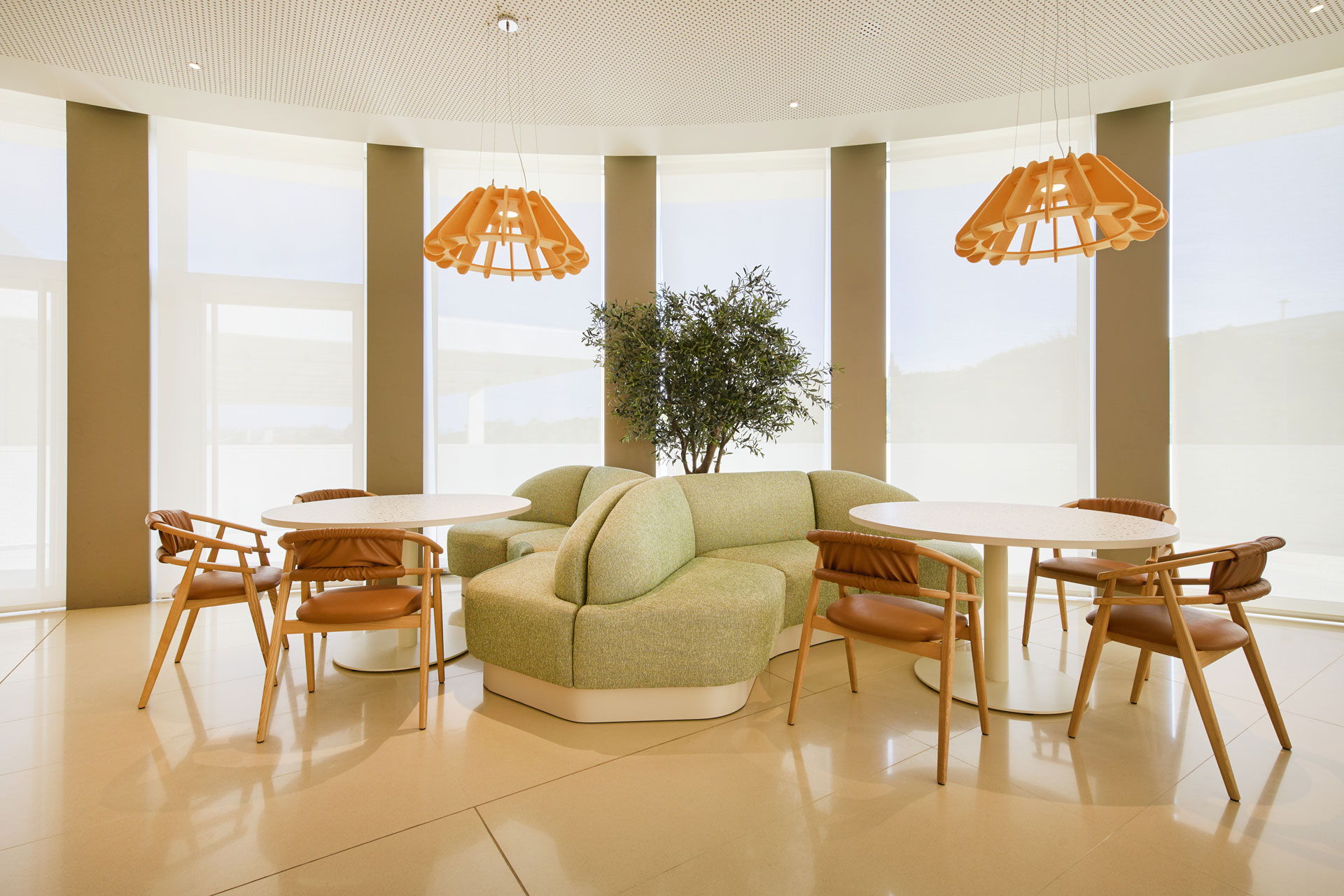
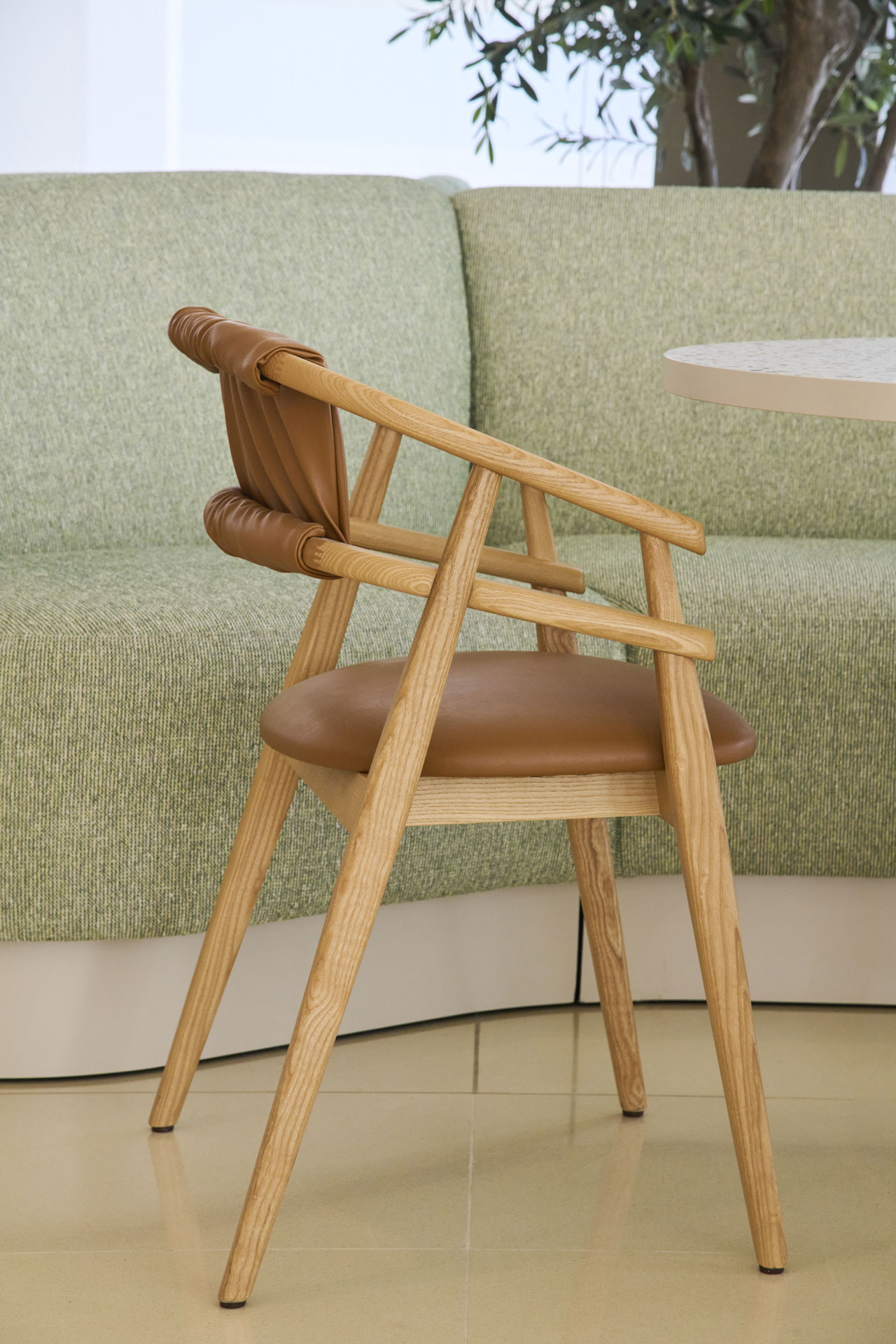
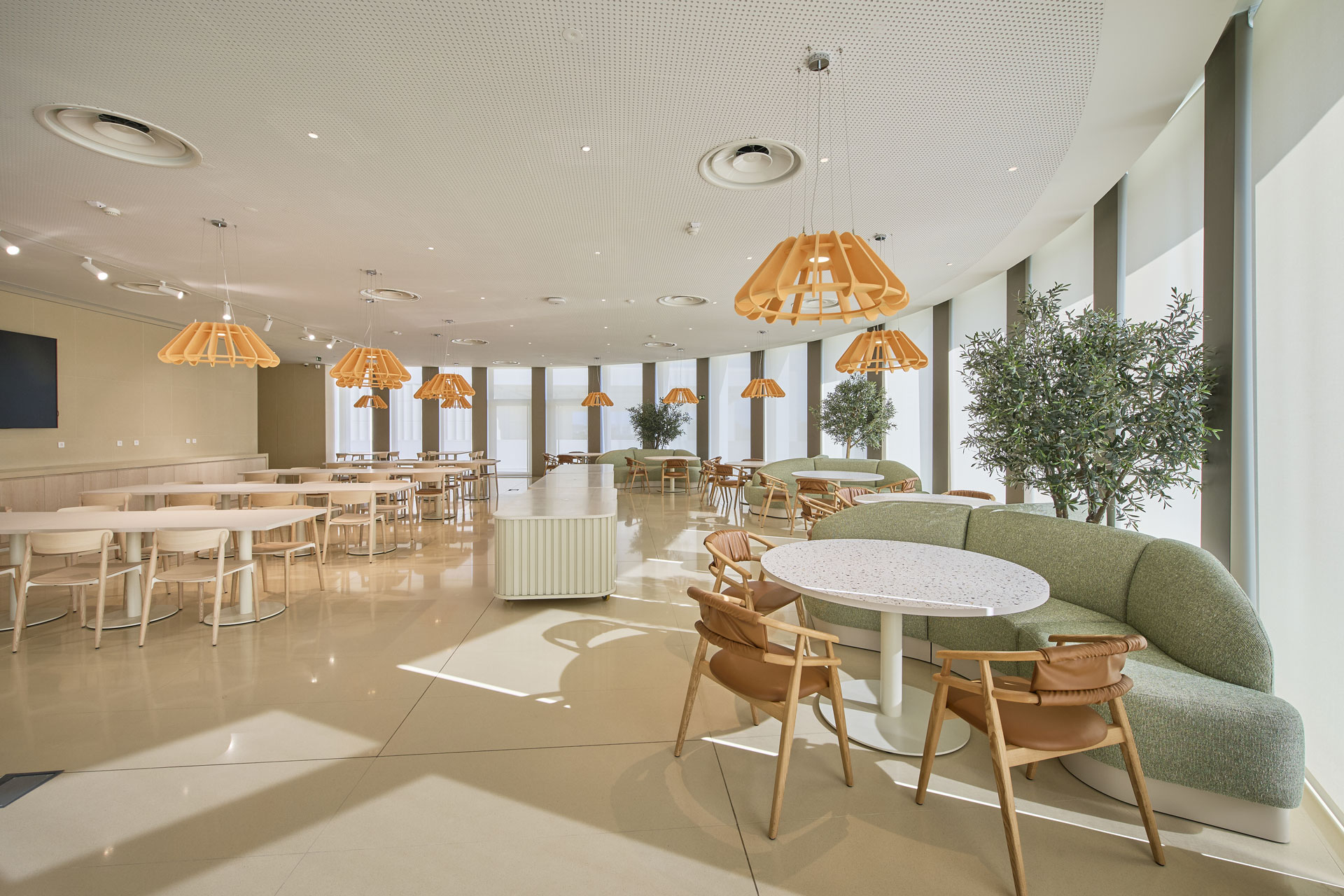
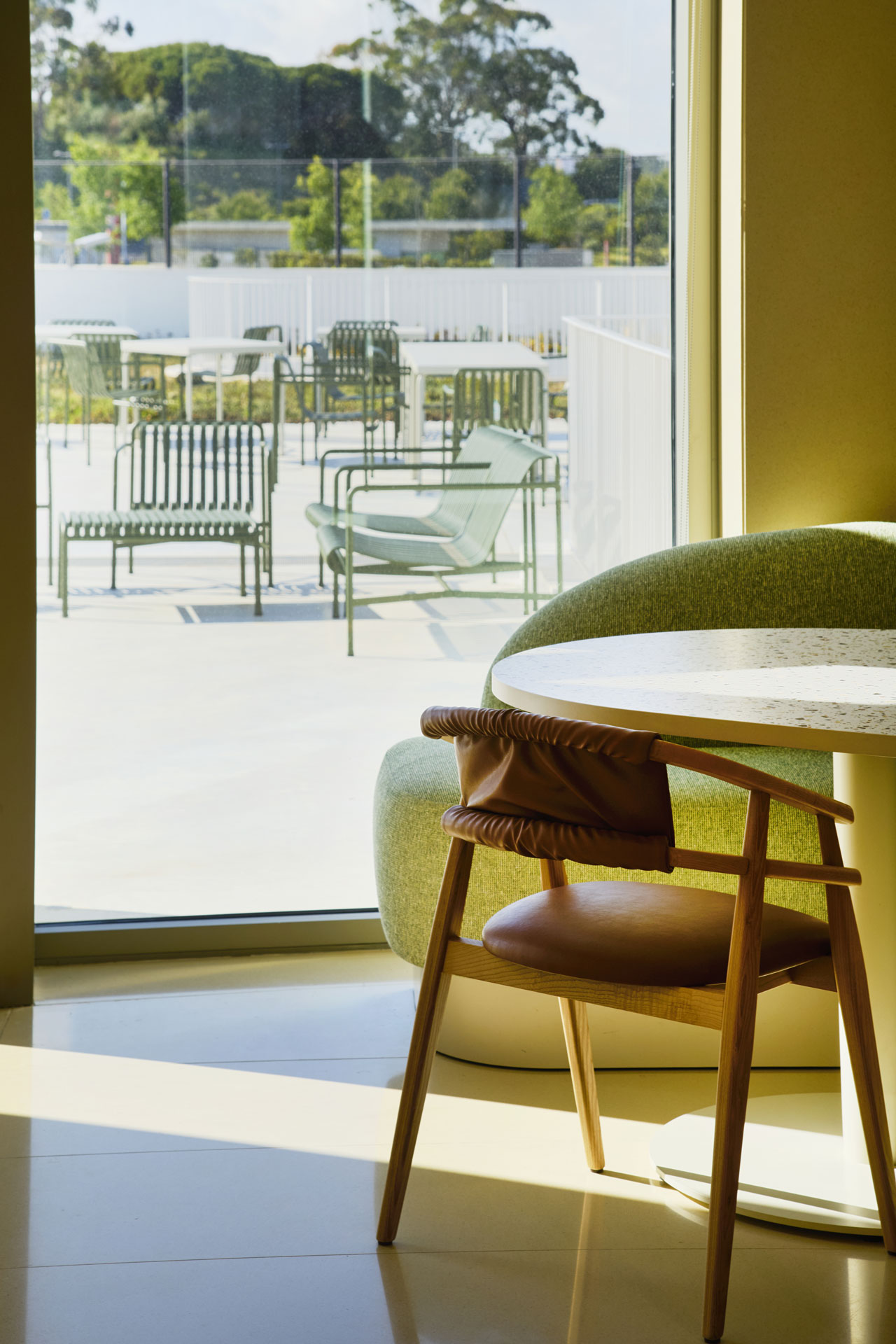
The restaurant, flexible and multifunctional, serves as both a dining room and a space for socializing, training, or informal meetings. It occupies a curved volume with floor-to-ceiling windows: the interior and exterior flow into one another seamlessly, with the balcony—furnished in gray-green—and views of the fields extending the space beyond the glass. The furnishings—an organic, rounded-shaped sofa in soft green, chairs in wood and caramel-colored leather, and tables with terrazzo tops—along with the pendant lights made of acoustic material, create an interior that deliberately contrasts with the restraint of the rest of the building: warmer, more informal, and more intimate.
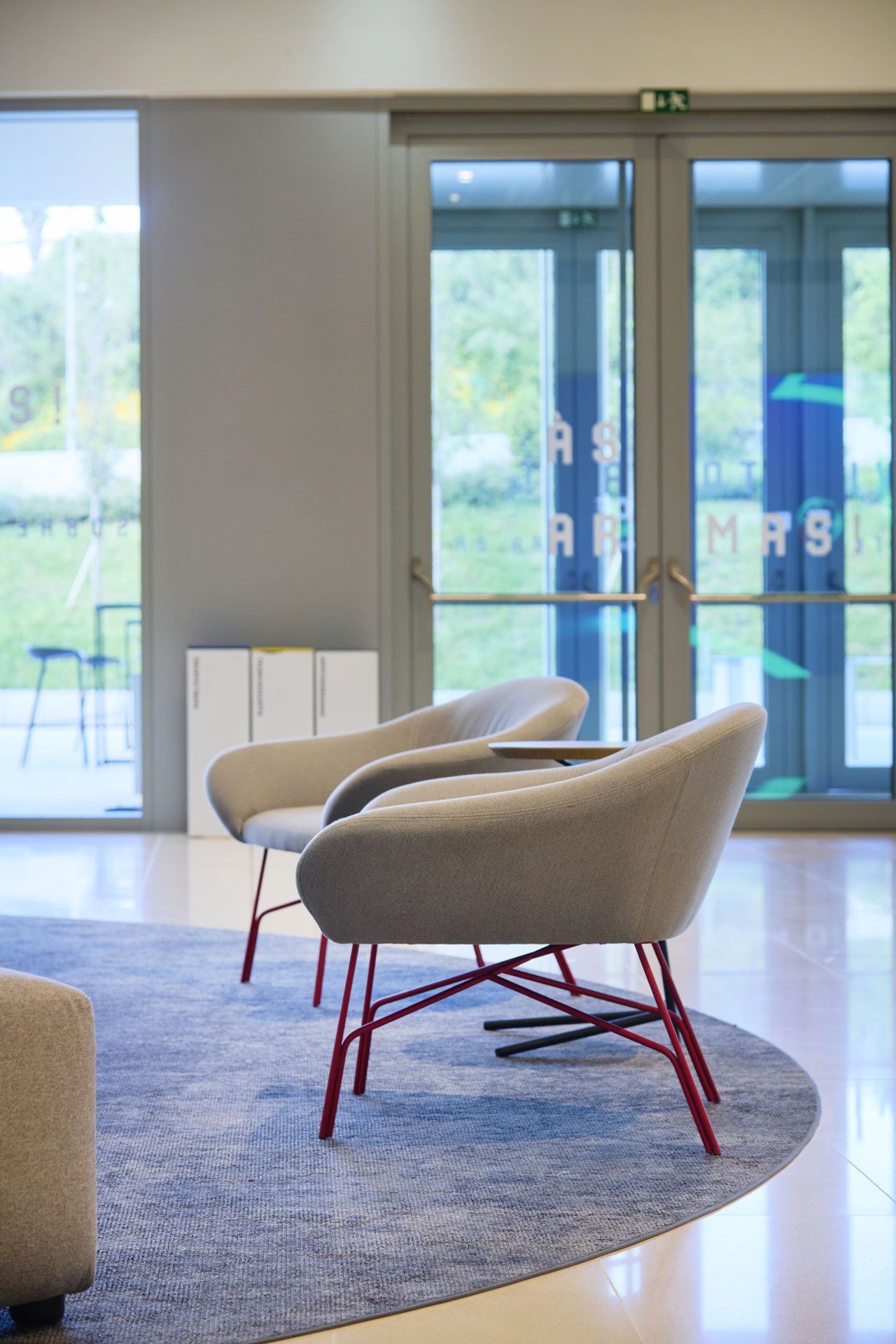
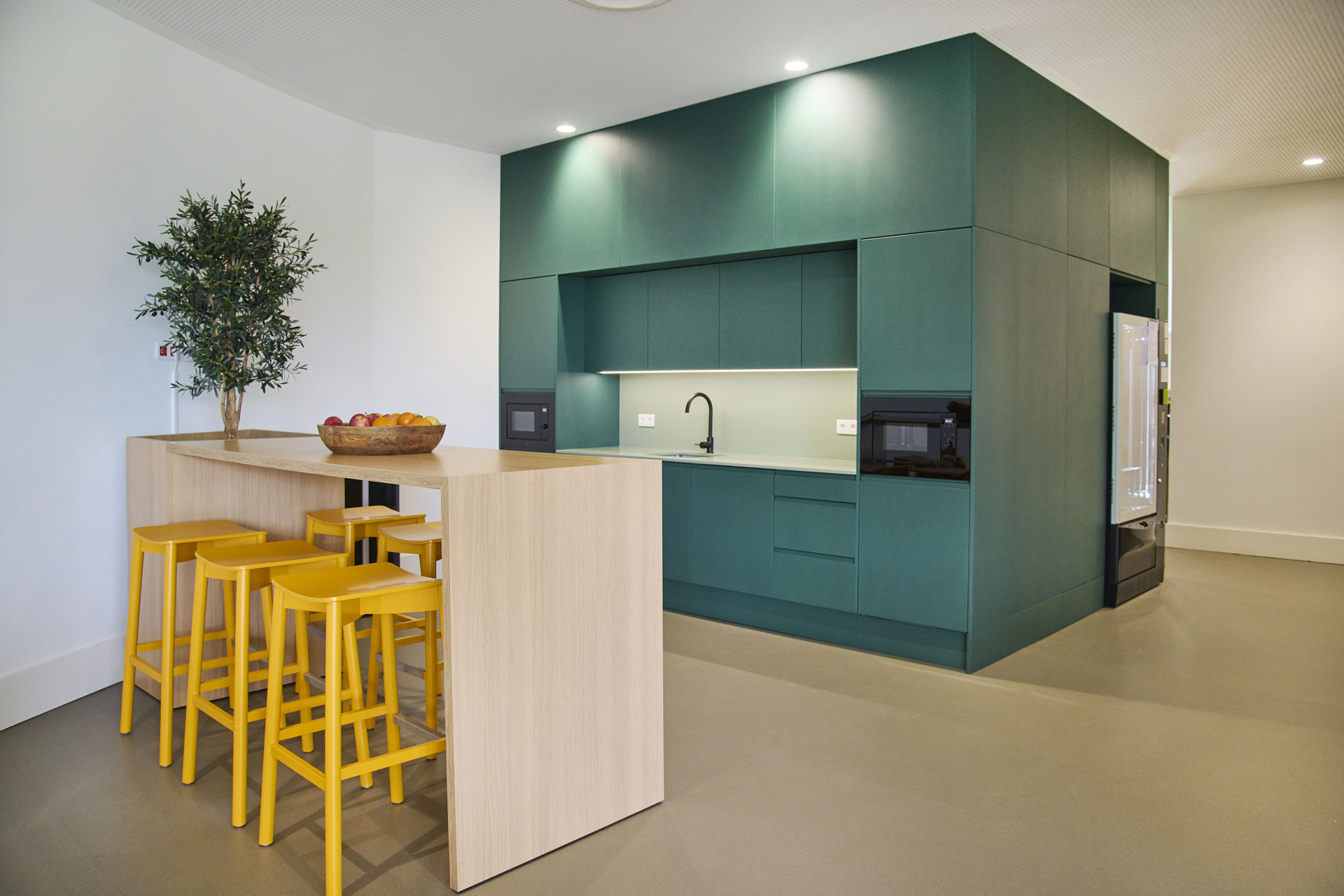
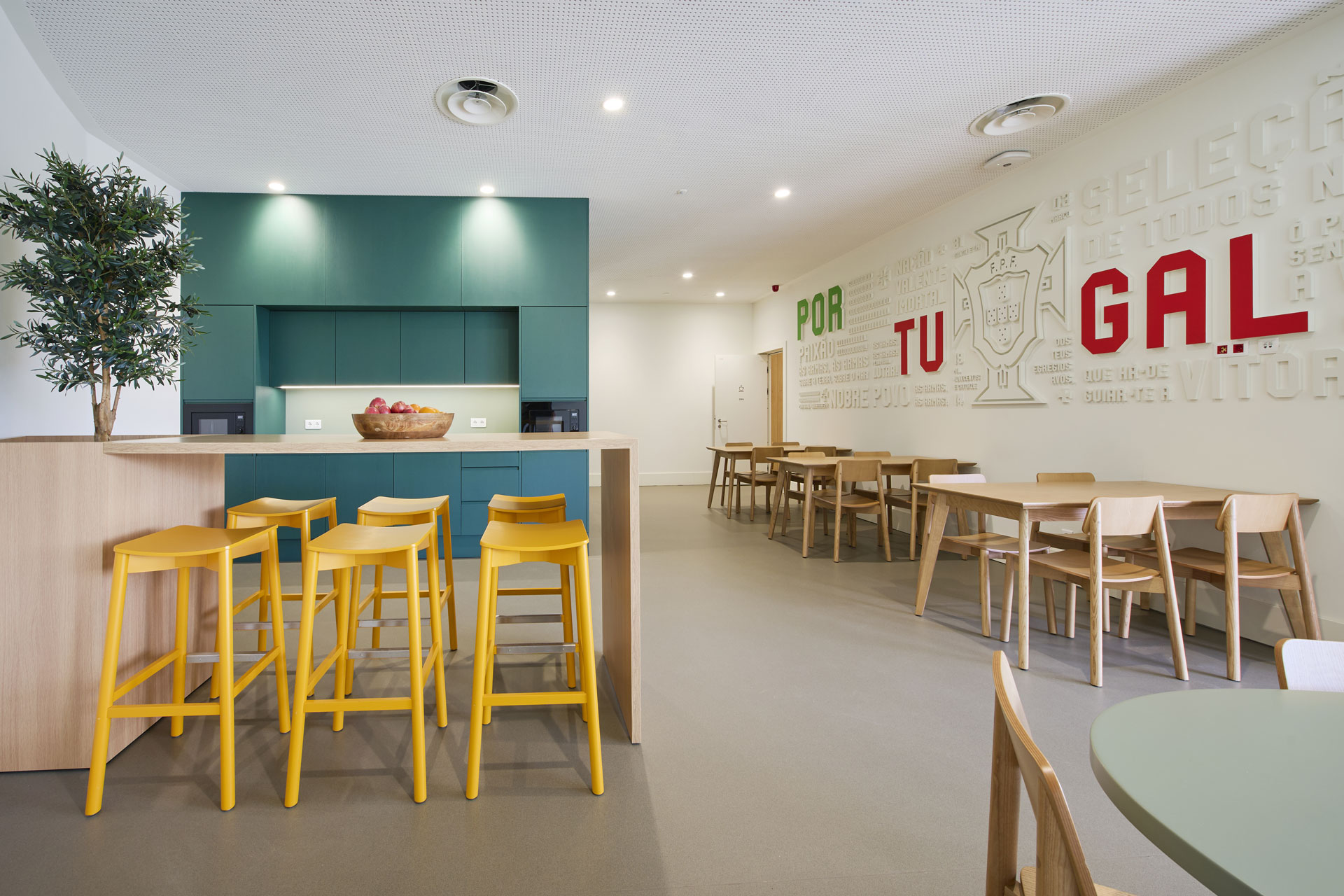
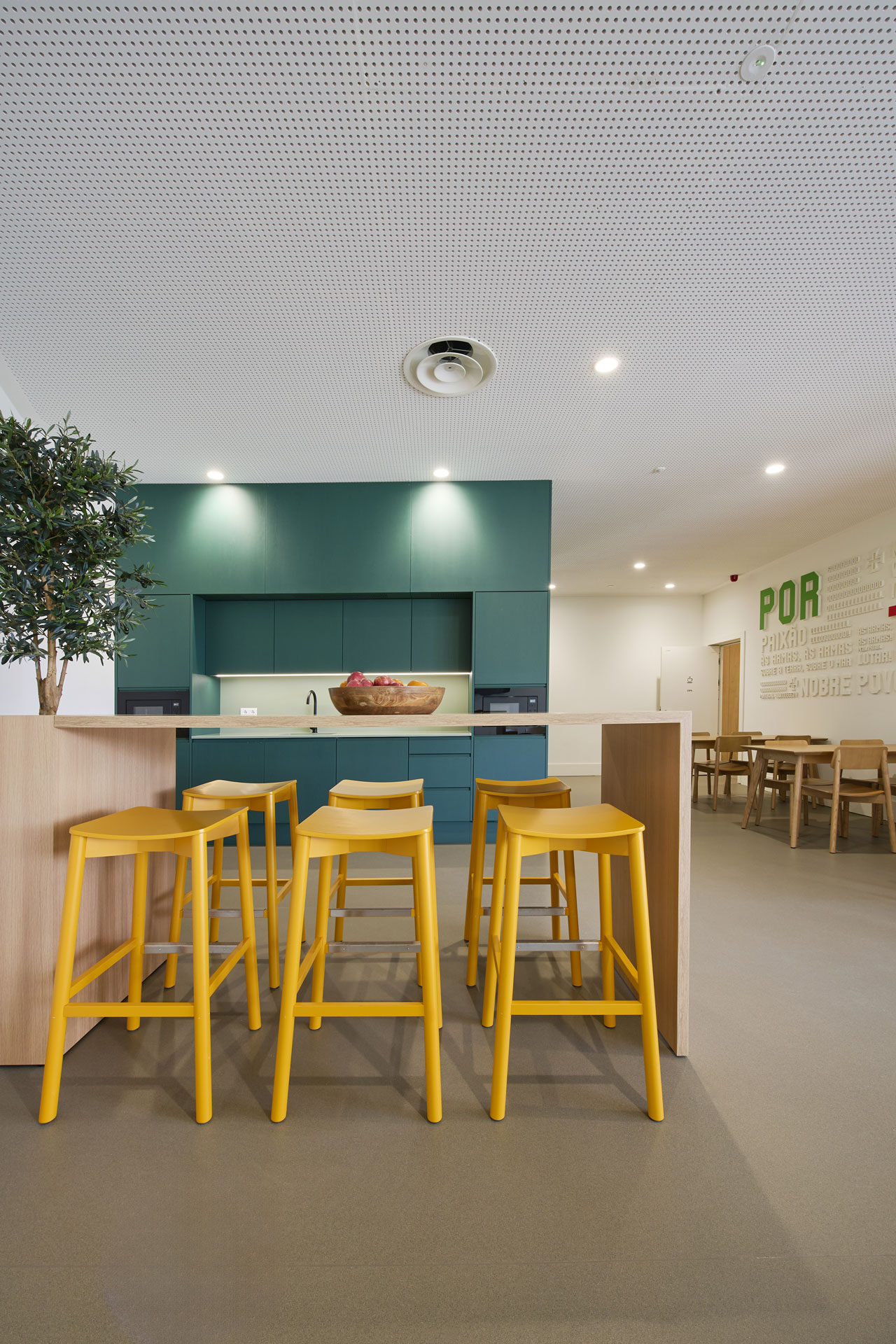
Both the Canal 11 lounge and the other support lounges and workstations—developed and strategically distributed throughout the buildings—convey the brand’s identity in a direct and energetic way. In particular, the Canal 11 break room—with its green cabinets, yellow high stools, and a wall featuring monumental typography reading “PORTUGAL” in green and red, flanked by FPF texts and symbols—defines this project. It is a space for daily use that is, at the same time, a statement of belonging.